Manufacturing operations depend on the coordination of multiple processes, from purchasing raw materials to managing production schedules, monitoring quality, and delivering finished products. When these processes operate in disconnected systems, manufacturers often face production delays, inventory discrepancies, rising operational costs, and limited visibility into factory performance.
A manufacturing ERP system helps bring these operations together, enabling businesses to make informed decisions using connected, reliable data.
Why Disconnected Manufacturing Processes Create Problems
Many manufacturers still rely on spreadsheets, standalone applications, and manual reporting to manage daily operations. While these methods may work initially, they can become difficult to maintain as production volumes and operational complexity increase.
Common challenges include:
- Inventory mismatches: Stock records do not reflect actual material availability.
- Production delays: Manufacturing schedules are affected by material shortages and unexpected order changes.
- Quality control gaps: Inspection results and rejection records are maintained separately from production data.
- Limited traceability: Identifying the raw material batch used in a finished product takes time.
- Cost overruns: Actual material consumption, labour costs, and production expenses are difficult to compare with planned costs.
Without connected information, teams may spend more time identifying problems than preventing them.
How Manufacturing ERP Improves Operational Visibility
A manufacturing ERP system connects essential business functions through a shared operational database. This gives production managers, procurement teams, quality personnel, and business leaders better visibility into ongoing activities.
1. Connect Inventory with Production Planning
Production planning depends on accurate information about raw materials, components, and available stock.
An integrated ERP system helps teams check material availability, monitor stock movements, track reorder requirements, and identify potential shortages before they disrupt production.
By connecting inventory records with production orders and bills of materials (BOMs), manufacturers can improve material planning and reduce avoidable delays.
2. Maintain Control Over BOM Revisions
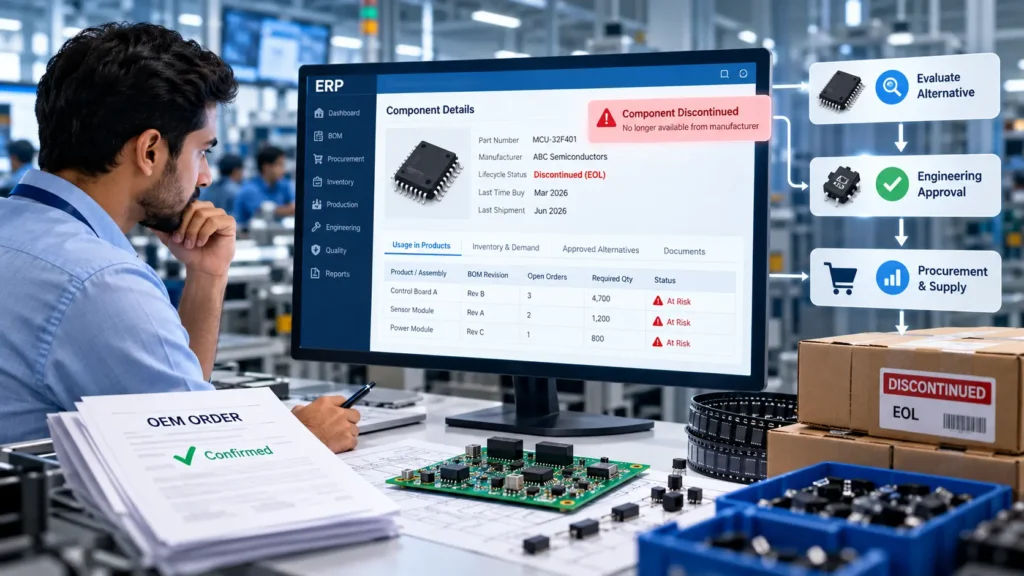
Engineering changes are common in manufacturing. However, if updated BOMs do not reach purchasing and production teams on time, the wrong components may be ordered or used.
Manufacturing ERP can help manage BOM revisions, connect engineering changes with production orders, and maintain records of the components required for specific products.
This improves coordination between engineering, procurement, and shop-floor teams.
3. Strengthen Quality Control and Traceability
Quality problems can become expensive when manufacturers cannot quickly identify the affected material batch, supplier, production stage, or inspection record.
A manufacturing ERP solution can connect quality inspections with production orders, material batches, supplier information, and finished goods records.
This enables teams to investigate non-conformances more efficiently, maintain traceability records, and support applicable quality management requirements.
The specific capabilities depend on the ERP configuration and the manufacturer’s operational and compliance needs.
4. Improve Production Monitoring
When production updates are recorded manually or shared across disconnected systems, managers may struggle to understand the actual status of work orders.
ERP workflows can provide visibility into production progress, work-order status, material consumption, rejected quantities, and planned-versus-actual performance.
With timely information, production teams can identify bottlenecks and take corrective action before minor issues affect delivery commitments.
5. Understand Manufacturing Costs
Profitability depends on more than sales revenue. Material waste, rework, unplanned downtime, and inaccurate production estimates can all affect margins.
A well-configured manufacturing ERP system helps consolidate relevant cost information, including material consumption, labour, production expenses, and wastage.
Comparing planned costs with actual results helps management identify cost variations and improve operational planning.
Why Custom ERP Software May Be the Right Choice
Not every manufacturer operates in the same way. A component manufacturer, an electronics producer, and a multi-location industrial business may have very different requirements for production workflows, quality checks, traceability, and reporting.
A custom ERP solution can be designed around these specific business processes instead of forcing every department to adapt to a standard workflow.
Before choosing a solution, manufacturers should evaluate their current systems, integration requirements, reporting needs, compliance obligations, and future growth plans.
How Jurysoft Helps Manufacturers Improve Process Control
Jurysoft provides technology solutions focused on business-specific operational requirements, including custom ERP development and digital transformation.
Its approach can help manufacturers evaluate how their existing processes, data flows, and software systems align with their operational goals.
Depending on the project scope, a manufacturing ERP solution can be designed to support:
- Inventory and procurement coordination
- Production planning and work-order tracking
- BOM revision management
- Quality control and product traceability
- Manufacturing cost visibility
- Connected reporting and workflow automation
Rather than starting with software features alone, manufacturers should begin by identifying the gaps that create delays, rework, manual effort, and limited visibility.
Conclusion: Build Better Control Across Manufacturing Operations
Manufacturing efficiency depends on how effectively inventory, production, quality, and cost information work together.
A manufacturing ERP system can help businesses reduce information gaps, improve coordination, strengthen traceability, and make more informed operational decisions. The results depend on the quality of implementation, data accuracy, process design, and employee adoption.
For manufacturers considering an ERP upgrade or evaluating their existing system, identifying operational gaps is a practical first step.
Explore Jurysoft’s manufacturing ERP solutions: https://jurysoft.com/erp/
Ready to identify gaps in your current ERP system? Learn more about Jurysoft’s Free ERP Gap Audit: https://jurysoft.com/erp/free-erp-gap-audit/