Electronic manufacturing is one of the fastest-growing and most complex industries in the world. From consumer electronics and industrial equipment to medical devices, telecommunications systems, and automotive electronics, manufacturers face increasing pressure to deliver high-quality products while controlling costs and meeting strict customer expectations.
Managing production with spreadsheets or disconnected software often leads to inventory mismatches, production delays, quality issues, and poor visibility across operations. As product complexity increases and supply chains become more global, manufacturers require a centralized system that connects every department.
This is where Enterprise Resource Planning (ERP) software becomes essential. An ERP system integrates production, inventory, procurement, quality control, finance, sales, and reporting into one platform, helping electronic manufacturers improve efficiency, reduce errors, and scale their operations.
In this blog, we’ll explore why ERP software is critical for electronic manufacturing companies and how it helps streamline operations from procurement to product delivery.
What Is ERP Software for Electronic Manufacturing?
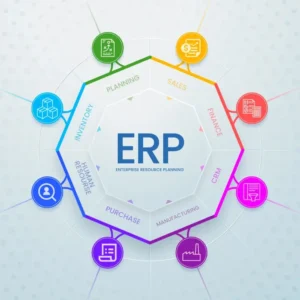
ERP (Enterprise Resource Planning) software is an integrated business management solution that connects all core business processes into a single system. Instead of using separate applications for inventory, purchasing, accounting, and production planning, manufacturers manage everything from one centralized platform.
For electronic manufacturers, ERP software is designed to handle industry-specific requirements such as:
- Bill of Materials (BOM) management
- Material Requirements Planning (MRP)
- Production scheduling
- Component traceability
- Inventory optimization
- Supplier management
- Quality control
- Regulatory compliance
- Financial management
- Real-time reporting
This integration provides complete visibility across manufacturing operations and enables faster, data-driven decision-making.
Why Electronic Manufacturing Is More Complex Than Ever
Modern electronic products contain hundreds or even thousands of components sourced from multiple suppliers worldwide. Even a minor delay in component availability can halt production.
Electronic manufacturers must manage:
- Rapid product innovation
- Short product life cycles
- Frequent engineering changes
- Global supply chains
- High customer quality expectations
- Strict industry compliance
- Cost control
- Demand fluctuations
Without ERP software, managing these complexities becomes increasingly difficult.
Challenges Faced by Electronic Manufacturing Companies
Inventory Management Challenges
Electronic manufacturers often deal with thousands of individual components.
Common issues include:
- Overstocking expensive components
- Running out of critical parts
- Duplicate inventory
- Slow-moving stock
- Inventory inaccuracies
ERP software provides real-time inventory visibility, ensuring manufacturers always know current stock levels and future requirements.
Production Planning Difficulties
Production planning involves balancing:
- Material availability
- Machine capacity
- Workforce scheduling
- Delivery deadlines
Manual planning often creates bottlenecks and missed deadlines.
ERP automates production scheduling using live inventory and customer orders, resulting in smoother workflows.
Frequent Engineering Changes
Electronic products evolve rapidly.
Engineering teams regularly update:
- PCB designs
- Product specifications
- Component replacements
- Assembly instructions
Without ERP, outdated versions can accidentally reach production.
ERP maintains version-controlled Bills of Materials (BOMs), ensuring production always uses the latest approved designs.
Supplier Coordination
Electronic manufacturing depends heavily on suppliers.
Manufacturers must monitor:
- Purchase orders
- Vendor performance
- Lead times
- Material quality
- Delivery schedules
ERP centralizes supplier information and improves procurement planning.
Maintaining Product Quality
Quality is critical in electronics manufacturing.
Manufacturers must inspect:
- Incoming materials
- Assembly processes
- Functional testing
- Final inspections
ERP software integrates quality management throughout production, reducing defects and improving customer satisfaction.
Key Benefits of ERP Software for Electronic Manufacturing
Centralized Business Operations
ERP eliminates disconnected systems by connecting:
- Production
- Procurement
- Inventory
- Sales
- Finance
- Warehousing
- Quality Assurance
Every department works using the same real-time information.
Better Inventory Control
Inventory is one of the largest investments for electronics manufacturers.
ERP helps businesses:
Reduce Excess Inventory
Smart demand forecasting prevents unnecessary purchases.
Prevent Stock-Outs
Automatic reorder levels ensure essential components are always available.
Improve Warehouse Efficiency
Barcode integration and location tracking simplify inventory management.
Accurate Bill of Materials (BOM) Management
Electronic products often contain multi-level BOMs with hundreds of components.
ERP manages:
- Multi-level BOM structures
- Component substitutions
- Revision history
- Engineering change control
This reduces production errors and ensures consistent product quality.
Material Requirements Planning (MRP)
MRP calculates exactly:
- What materials are needed
- How much is required
- When components should arrive
- Which purchase orders to generate
This minimizes inventory costs while ensuring uninterrupted production.
Real-Time Production Monitoring
ERP provides live production visibility.
Managers can monitor:
- Work orders
- Machine utilization
- Production status
- Labor efficiency
- Material consumption
Real-time dashboards help identify issues before they become costly problems.
Improved Quality Management
Quality management becomes proactive rather than reactive.
ERP tracks:
- Inspection reports
- Non-conformance records
- Corrective actions
- Supplier quality
- Customer complaints
This helps reduce defects while maintaining high manufacturing standards.
Complete Component Traceability
Traceability is essential in electronics manufacturing.
ERP records:
- Component batch numbers
- Supplier information
- Manufacturing history
- Inspection records
- Shipment details
If a defective component is discovered, affected products can be identified quickly.
Faster Procurement Process
ERP automates purchasing by:
- Generating purchase requests
- Tracking supplier performance
- Monitoring lead times
- Comparing vendor pricing
- Managing approvals
Procurement teams spend less time on manual processes and more time optimizing supplier relationships.
Better Financial Control
ERP integrates manufacturing with finance.
Businesses gain visibility into:
- Production costs
- Material expenses
- Labor costs
- Profit margins
- Cash flow
- Budget performance
This enables more informed financial decisions.
How ERP Improves Every Department
Production Team
Benefits include:
- Automated work orders
- Production scheduling
- Machine planning
- Material availability
- Reduced downtime
Procurement Team
ERP helps procurement teams:
- Track supplier performance
- Reduce purchasing delays
- Manage purchase orders
- Forecast material demand
Warehouse Team
Warehouse operations become more organized with:
- Barcode scanning
- Stock transfers
- Bin location tracking
- Real-time inventory updates
Finance Department
Finance teams gain:
- Automated accounting
- Cost tracking
- Faster invoicing
- Financial reporting
- Tax management
Sales Team
Sales representatives access:
- Live inventory
- Delivery schedules
- Customer order status
- Production progress
This improves customer communication.
ERP Supports Regulatory Compliance
Many electronic manufacturers must comply with customer and industry standards.
ERP helps maintain documentation for:
- Quality inspections
- Material traceability
- Process history
- Supplier records
- Product revisions
- Audit reports
This simplifies internal audits and customer compliance requirements.
Business Intelligence and Real-Time Reporting
ERP software provides powerful dashboards and analytics.
Manufacturers can monitor:
- Production efficiency
- Inventory turnover
- Machine utilization
- Sales performance
- Procurement costs
- Delivery performance
- Financial health
Real-time insights help management make faster and more accurate decisions.
Scalability for Growing Electronic Manufacturers
As businesses expand, operations become more complex.
ERP scales alongside growth by supporting:
- Multiple warehouses
- Multiple production plants
- Multiple business locations
- Additional product lines
- Higher production volumes
- More users
This eliminates the need to replace systems as the company grows.
Why Cloud ERP Is Becoming Popular
Many electronic manufacturers now choose cloud-based ERP solutions because they offer:
- Lower infrastructure costs
- Remote access
- Automatic updates
- Better security
- Easier scalability
- Faster implementation
Cloud ERP also enables managers to monitor operations from anywhere using secure internet access.
Choosing the Right ERP for Electronic Manufacturing
Not every ERP system is designed for manufacturing. Electronic manufacturers should choose a solution that includes:
Manufacturing Management
- Production planning
- Shop floor control
- Work orders
Inventory Management
- Real-time stock tracking
- Barcode support
- Warehouse management
BOM & MRP
- Multi-level BOM
- Material planning
- Engineering revisions
Quality Management
- Inspection workflows
- Defect tracking
- Compliance records
Procurement
- Supplier management
- Purchase orders
- Vendor performance
Finance
- Accounting
- Costing
- Profitability analysis
Reporting
- Live dashboards
- Custom reports
- KPI tracking
An ERP built for manufacturing delivers greater efficiency than generic business management software.
Why Choose Jurysoft ERP for Electronic Manufacturing?
Electronic manufacturers need an ERP solution that goes beyond basic accounting and inventory management. Jurysoft ERP is designed to streamline manufacturing operations by integrating procurement, production planning, inventory management, quality control, finance, and reporting into one centralized platform.
With real-time visibility across departments, businesses can optimize material planning, manage complex Bills of Materials (BOM), monitor production progress, improve component traceability, and make informed decisions using powerful dashboards. Whether you’re a growing manufacturer or managing multiple production facilities, Jurysoft ERP helps improve operational efficiency, reduce manual processes, and support long-term business growth.
Conclusion
Electronic manufacturing is becoming increasingly complex due to shorter product life cycles, global supply chains, rising customer expectations, and growing regulatory requirements. Managing these challenges with disconnected systems or spreadsheets limits productivity and increases operational risk.
A manufacturing ERP solution brings every critical business function together into one integrated platform. From inventory management and production scheduling to quality control, procurement, financial management, and real-time analytics, ERP helps electronic manufacturers improve efficiency, reduce costs, maintain product quality, and respond quickly to changing market demands.
For companies looking to streamline operations and scale with confidence, implementing a robust ERP system like Jurysoft ERP can be a strategic investment that supports sustainable growth and long-term success.