High-tech manufacturing requires precision, speed, traceability, and strict quality control. Aerospace and electronics manufacturers often manage complex bills of materials, multiple production stages, specialized components, regulatory requirements, and demanding delivery schedules. Even a small planning error can lead to material shortages, production delays, excess inventory, or missed deadlines.
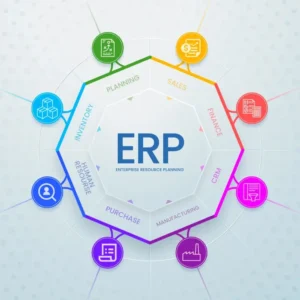
An Enterprise Resource Planning (ERP) system helps manufacturers bring production planning, inventory, purchasing, quality, finance, and other business operations into one connected platform. For high-tech manufacturers, ERP software can provide better visibility into production activities and help teams make faster, data-driven decisions.
Understanding Production Planning in High-Tech Manufacturing
Production planning involves determining what needs to be manufactured, when it should be produced, what materials are required, and which resources are available. In aerospace and electronics manufacturing, this process can be particularly challenging because products may contain hundreds or thousands of components.
Manufacturers need to coordinate:
- Raw materials and components
- Bills of materials (BOMs)
- Production orders
- Machines and equipment
- Workforce availability
- Supplier lead times
- Quality inspections
- Inventory levels
- Customer delivery schedules
Using spreadsheets or disconnected systems to manage these activities can create information gaps. An ERP system provides a centralized environment where production teams can monitor and manage these processes more efficiently.
How ERP Optimizes Production Planning
1. Centralized Production Data
An ERP system connects production information with inventory, procurement, sales, purchasing, and other business functions. Instead of relying on separate spreadsheets and applications, teams can access relevant information from a centralized system.
Production planners can view current inventory, open orders, material requirements, production status, and purchasing information. This improves coordination between departments and reduces the risk of decisions being based on outdated data.
2. Accurate Material Requirements Planning
Material shortages can bring production to a standstill. ERP systems support Material Requirements Planning (MRP) by analyzing production requirements, bills of materials, inventory levels, and planned orders.
The system can help determine:
- Which materials are required
- Required quantities
- When materials are needed
- Current stock availability
- Potential shortages
- Purchasing requirements
For aerospace and electronic manufacturing, where certain components may have long lead times, this capability can help production teams plan procurement well in advance.
3. Better Production Scheduling
Effective scheduling is essential for meeting customer delivery commitments. ERP software helps planners organize production orders according to available machines, materials, labor, priorities, and deadlines.
A production schedule can provide greater visibility into:
- Work orders
- Machine capacity
- Production timelines
- Work-in-progress
- Bottlenecks
- Delivery commitments
By having this information in one system, manufacturers can identify potential scheduling conflicts earlier and make adjustments before they affect delivery.
4. Improved Inventory Management
High-tech manufacturers often need to maintain a wide range of raw materials, components, subassemblies, and finished products. Overstocking increases carrying costs, while understocking can cause production interruptions.
An ERP system provides real-time inventory visibility and helps organizations track stock across locations, warehouses, and production stages.
Features such as inventory management, stock tracking, reorder levels, batch tracking, and material allocation can help manufacturers maintain the right inventory at the right time.
5. Bill of Materials and Revision Control
Aerospace and electronics products frequently undergo engineering changes. Using an outdated component or manufacturing specification can create quality and compliance problems.
ERP software can manage Bills of Materials (BOMs) and support revision control. Production teams can work with the appropriate version of a product structure and maintain better visibility into engineering changes.
This is particularly useful when manufacturers need to manage multiple product variants, assemblies, subassemblies, and engineering revisions.
ERP for Aerospace Manufacturing
Aerospace manufacturing requires extensive documentation, quality processes, and product traceability. Components may need to be tracked throughout their entire production lifecycle.
An ERP system can support aerospace manufacturers by connecting production planning with:
- Lot and serial number tracking
- Quality management
- Material traceability
- Work orders
- Supplier management
- Inspection processes
- Compliance documentation
- Inventory management
This connected approach helps organizations maintain better production records and improve operational visibility.
ERP for Electronics Manufacturing
Electronic manufacturing also involves complex components, fast product changes, and strict quality requirements. Components such as semiconductors, circuit boards, connectors, and other electronic parts must be carefully managed.
ERP software can help electronics manufacturers coordinate electronic manufacturing processes by connecting procurement, inventory, production, quality, and order management.
With better visibility into component availability and production requirements, planners can respond more effectively to changing demand and supply conditions.
Real-Time Production Visibility
One of the major benefits of ERP for manufacturing is real-time visibility. Production managers can monitor the status of orders and identify issues without waiting for information from multiple departments.
Dashboards and reports can provide insights into:
- Production progress
- Pending work orders
- Material shortages
- Inventory status
- Production delays
- Machine utilization
- Order fulfillment
- Quality issues
This allows managers to respond to problems faster and make informed production decisions.
Reducing Production Bottlenecks
Production bottlenecks can affect the entire manufacturing schedule. A shortage of material, unavailable equipment, limited workforce capacity, or delayed supplier delivery can prevent downstream operations from continuing.
ERP systems help identify dependencies between materials, operations, and production orders. By analyzing production data, planners can identify potential bottlenecks and adjust schedules or procurement activities accordingly.
This can contribute to smoother production workflow management and improved resource utilization.
Connecting Procurement With Production
Production planning cannot be separated from procurement. If required materials are not available on time, production schedules can be disrupted.
ERP connects purchasing and production planning so procurement teams can understand upcoming material requirements. Purchase orders can be planned according to production demand, supplier lead times, and inventory levels.
This helps organizations create a more coordinated supply chain management process.
Supporting Quality and Traceability
Quality management is especially important in aerospace and electronics manufacturing. ERP can connect quality processes with production and inventory activities.
Manufacturers can maintain records related to inspections, non-conformances, materials, batches, serial numbers, and production orders.
Better traceability can make it easier to identify where a component or material was used and support more organized quality investigations.
Data-Driven Production Decisions
Modern manufacturing depends heavily on accurate operational data. ERP systems transform production information into useful reports and performance insights.
Manufacturers can analyze production efficiency, inventory consumption, order status, purchasing requirements, and other key metrics. These insights help managers identify inefficiencies and improve planning strategies.
Instead of relying primarily on assumptions or manually prepared reports, decision-makers can use centralized operational data.
Why High-Tech Manufacturers Need Integrated ERP
High-tech manufacturing environments are becoming increasingly complex. Customers expect high-quality products, shorter delivery times, complete traceability, and consistent production performance.
An ERP system helps bring these requirements together by connecting different areas of the business. From production planning and scheduling to inventory, procurement, quality, and traceability, ERP creates a more integrated manufacturing environment.
For aerospace and electronics companies, this integration can support better resource planning, reduce manual processes, improve visibility, and help teams respond quickly to production challenges.
Conclusion
Effective production planning is essential for high-tech manufacturers operating in demanding industries. Aerospace and electronics companies need to manage complex products, specialized materials, strict quality requirements, and precise delivery schedules.
An ERP system for manufacturing provides the tools needed to connect production planning with inventory, procurement, quality, supply chain, and other business processes. By centralizing data, improving material planning, optimizing schedules, supporting traceability, and providing real-time visibility, ERP can help manufacturers build a more efficient and controlled production environment.
For organizations looking to improve aerospace manufacturing ERP, electronics manufacturing ERP, production scheduling, inventory management, and overall operational efficiency, implementing the right ERP solution can provide a strong foundation for scalable and data-driven manufacturing.