Electronic manufacturing requires precision, speed, and efficient coordination across multiple production stages. From sourcing electronic components and managing bills of materials to scheduling assembly and maintaining quality standards, manufacturers need accurate information to make better decisions. Even a small delay in procurement or production can affect delivery timelines and customer satisfaction.
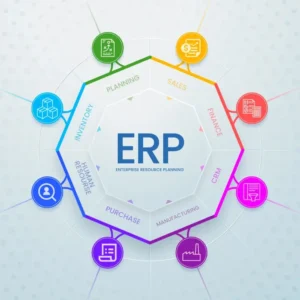
This is where ERP for electronic manufacturing plays an important role. An Enterprise Resource Planning system connects production, inventory, purchasing, sales, finance, and other business functions on a centralized platform. By providing real-time visibility into operations, ERP helps electronic manufacturers improve production planning, reduce delays, optimize resources, and maintain consistent product quality.
For companies operating in complex and highly competitive manufacturing environments, implementing the right manufacturing ERP software can create a more structured and efficient production process.
What Is Production Planning in Electronic Manufacturing?
Production planning involves deciding what needs to be manufactured, how much should be produced, when production should begin, and what resources are required. In electronic manufacturing, this process can be particularly complex because products often contain numerous components, specialized materials, and multiple assembly stages.
Effective production planning requires manufacturers to coordinate:
- Raw material availability
- Electronic component procurement
- Bill of Materials (BOM)
- Machine and equipment capacity
- Workforce availability
- Production schedules
- Customer orders
- Quality requirements
- Delivery deadlines
Without an integrated system, manufacturers may rely on spreadsheets, disconnected applications, or manual processes. These approaches can create data inconsistencies and make it difficult to respond quickly to changing production requirements.
How ERP Improves Production Planning
1. Centralized Production Data
One of the major benefits of an ERP system for manufacturing is centralized data management. Instead of maintaining information across different spreadsheets and software applications, ERP brings important production information together in one system.
Production managers can access information about inventory, purchase orders, customer demand, production orders, and resource availability from a centralized platform.
This improves communication between departments and provides planners with reliable information when making production decisions.
2. Accurate Demand Planning
Understanding customer demand is essential for efficient manufacturing. Producing too much can increase inventory and storage costs, while producing too little can result in delays and missed sales opportunities.
ERP software helps manufacturers analyze historical orders, current sales requirements, inventory levels, and upcoming demand. This information can support more accurate production forecasts.
With better demand planning, electronic manufacturers can create production schedules that are aligned with actual business requirements.
3. Better Bill of Materials Management
Electronic products can contain hundreds or even thousands of individual components. Managing these components manually can become challenging, particularly when products have different configurations or revisions.
An ERP platform helps maintain accurate Bill of Materials (BOM) information. Production teams can identify the required components, quantities, specifications, and production stages associated with a product.
Accurate BOM management reduces the possibility of material shortages, incorrect component usage, and production errors.
4. Improved Material Requirements Planning
Material Requirements Planning (MRP) is a critical part of production management. It determines what materials are required, how much is needed, and when those materials should be available.
With ERP and MRP software, manufacturers can connect production requirements with inventory and procurement activities.
For example, when a new production order is created, the system can help identify whether the required components are already available. If materials are insufficient, procurement teams can plan purchases according to production schedules.
This helps reduce material shortages and supports smoother production operations.
ERP Helps Optimize Inventory Management
Inventory management is especially important in electronic manufacturing because manufacturers often deal with large numbers of components with different specifications, costs, and lead times.
Real-Time Inventory Visibility
ERP provides real-time visibility into inventory levels, material movements, purchase orders, and stock requirements. Production planners can determine whether components are available before scheduling manufacturing activities.
This reduces the risk of production interruptions caused by missing materials.
Reduced Excess Inventory
Maintaining excessive inventory can tie up working capital and increase storage costs. ERP systems help manufacturers compare inventory levels with current and forecasted production requirements.
This allows businesses to maintain more appropriate stock levels while ensuring essential materials are available when required.
Better Production Scheduling
Production scheduling involves assigning production activities to available machines, workers, and facilities. In electronic manufacturing, scheduling can become complicated when multiple orders compete for the same resources.
An ERP for manufacturing industry can help production teams organize manufacturing activities based on available resources, priorities, material availability, and delivery deadlines.
Managing Machine Capacity
ERP systems can provide information about machine availability and planned production activities. This helps manufacturers identify capacity constraints and avoid unrealistic production schedules.
Managing Workforce Requirements
Production planning also depends on skilled employees. ERP can help organizations understand workforce requirements and coordinate labor availability with production schedules.
Better resource planning can improve productivity while reducing unnecessary downtime.
ERP Improves Production Visibility
Production visibility allows managers to understand what is happening across the manufacturing process.
With an integrated ERP platform, businesses can monitor:
- Production orders
- Work-in-progress
- Material availability
- Production status
- Purchase orders
- Inventory movements
- Quality information
- Delivery requirements
This visibility enables managers to identify potential issues earlier rather than waiting until they affect final delivery.
For electronic manufacturers handling multiple products and orders, real-time operational visibility can significantly improve decision-making.
Supporting Quality Control
Quality is critical in electronic manufacturing. Defective components or incorrect assembly can result in product failures, customer complaints, and increased costs.
An ERP system for electronic manufacturing can integrate quality management activities with production processes.
Tracking Quality Information
Manufacturers can record inspections, quality checks, defects, and production-related issues. This creates a structured record of quality information throughout the manufacturing process.
Improving Traceability
Traceability is another important requirement for many electronic manufacturing operations. ERP systems can help organizations track materials, production orders, suppliers, and finished products.
Better traceability makes it easier to identify the source of production issues and take corrective action.
ERP Supports Better Procurement Planning
Production cannot continue efficiently when essential components are unavailable. ERP connects procurement with production planning so purchasing teams can make decisions based on actual requirements.
The system can help identify:
- Required materials
- Current inventory
- Open purchase orders
- Supplier lead times
- Future production requirements
- Material shortages
This enables procurement teams to plan purchases earlier and coordinate supplier deliveries with production schedules.
Reducing Production Delays and Costs
Poor planning can result in machine downtime, excess inventory, rush purchasing, overtime, material shortages, and missed delivery deadlines.
By integrating production, inventory, purchasing, and sales data, ERP software for electronics manufacturing helps organizations reduce these inefficiencies.
Better planning can contribute to:
- Lower inventory costs
- Reduced production downtime
- Improved resource utilization
- Fewer material shortages
- Better order fulfillment
- Reduced manual data entry
- Improved production efficiency
These improvements can ultimately support stronger operational performance.
Data-Driven Manufacturing Decisions
Modern manufacturers need more than basic production records. They need actionable information that helps them understand performance and identify areas for improvement.
ERP dashboards and reports can provide insights into production performance, inventory turnover, order status, procurement activities, and operational costs.
Managers can use this information to identify bottlenecks, adjust schedules, optimize resources, and improve future production planning.
Why Electronic Manufacturers Need an Integrated ERP System
Electronic manufacturing involves interconnected processes. A change in customer demand can affect production schedules, which can influence material requirements, procurement activities, inventory levels, and delivery timelines.
An integrated ERP solution for electronic manufacturing connects these processes.
Instead of managing each department separately, manufacturers can create a connected operational environment where information flows between teams. This improves coordination and allows businesses to respond faster to changing requirements.
Conclusion
Effective production planning is essential for electronic manufacturers looking to improve efficiency, control costs, and meet customer expectations. From demand forecasting and BOM management to inventory control, procurement, scheduling, and quality management, ERP can bring multiple manufacturing processes together on one platform.
By implementing the right ERP for electronic manufacturing, businesses can gain greater visibility into their operations, make informed production decisions, optimize resources, and reduce avoidable delays.
For electronic manufacturing companies looking to build a more connected and scalable operation, ERP is not simply a software investment. It can become a strategic foundation for improving production planning and supporting long-term manufacturing growth.