The aerospace and electronics manufacturing industries operate in one of the world’s most demanding environments. Every product must meet strict quality standards, comply with industry regulations, and be delivered on time. As technology evolves and customer expectations increase, relying on disconnected software and manual processes can slow growth and increase operational risks.
An advanced ERP for Aerospace and Electronics Manufacturing helps businesses streamline operations, improve quality control, ensure complete traceability, and make faster, data-driven decisions. Whether you manufacture aerospace components, electronic assemblies, PCBs, avionics systems, sensors, or industrial electronics, an ERP solution provides the visibility and control needed to stay competitive.
In this blog, we’ll explore how ERP helps manufacturers future-proof their operations while improving productivity, compliance, and profitability.
Why Aerospace and Electronics Manufacturers Need ERP
Modern manufacturing involves far more than production. Companies must manage procurement, inventory, production planning, quality inspections, engineering changes, supplier performance, compliance documentation, and customer deliveries—all while controlling costs.
Without an integrated ERP system, manufacturers often experience:
- Inventory inaccuracies
- Production delays
- Manual documentation
- Poor supplier visibility
- Compliance challenges
- Limited production tracking
- High operational costs
- Data silos between departments
An ERP platform connects every department into a single system, ensuring real-time information flows throughout the organization.
What Is ERP for Aerospace and Electronics Manufacturing?
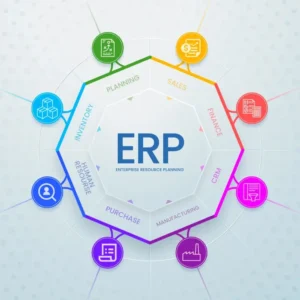
ERP (Enterprise Resource Planning) is a centralized business management system that integrates manufacturing, finance, inventory, procurement, quality management, engineering, supply chain, customer orders, and reporting into one platform.
Instead of using multiple disconnected applications, manufacturers gain complete visibility across their operations.
An ERP system enables businesses to:
- Automate daily operations
- Improve production efficiency
- Reduce manual errors
- Maintain regulatory compliance
- Monitor inventory in real time
- Track every manufactured component
- Improve customer satisfaction
Benefits of ERP for Aerospace and Electronics Manufacturing
Complete Production Visibility
Manufacturing managers require instant insights into production performance.
ERP provides:
- Live production dashboards
- Work order tracking
- Machine utilization
- Labor productivity
- Production scheduling
- Manufacturing bottleneck identification
This allows faster decisions and improved operational efficiency.
End-to-End Product Traceability
Traceability is essential in aerospace and electronics manufacturing.
ERP tracks:
- Raw materials
- Supplier batches
- Component serial numbers
- Production stages
- Assembly history
- Finished products
- Customer deliveries
Complete traceability simplifies audits and improves quality assurance.
Better Inventory Management
Managing thousands of electronic components and aerospace materials manually increases inventory costs.
ERP helps businesses:
- Monitor inventory levels
- Reduce excess stock
- Prevent stock shortages
- Automate reordering
- Improve warehouse efficiency
- Track inventory movement
Accurate inventory data reduces waste while improving production continuity.
Smarter Production Planning
Production planning becomes difficult when data is scattered across spreadsheets.
ERP enables manufacturers to:
- Create accurate production schedules
- Forecast material demand
- Allocate resources efficiently
- Balance workloads
- Optimize machine utilization
- Minimize downtime
This ensures smoother manufacturing operations.
Quality Management Made Easier
Quality is critical in aerospace and electronics manufacturing.
ERP supports:
- Incoming material inspections
- In-process quality checks
- Final product inspections
- Non-conformance management
- Corrective actions
- Preventive actions
- Digital quality records
This improves product consistency and customer confidence.
Regulatory Compliance
Manufacturers must comply with various international quality standards.
ERP helps maintain compliance through:
- Digital documentation
- Process standardization
- Audit trails
- Controlled workflows
- Quality records
- Approval management
- Revision control
This simplifies internal and external audits.
Supplier Management
Supplier performance directly affects manufacturing efficiency.
ERP allows businesses to:
- Evaluate supplier performance
- Track supplier quality
- Manage purchase orders
- Compare supplier pricing
- Monitor delivery schedules
- Reduce procurement delays
Stronger supplier management leads to a more reliable supply chain.
Engineering Change Management
Engineering changes are common in aerospace and electronics manufacturing.
ERP helps organizations:
- Manage design revisions
- Track engineering change requests
- Control document versions
- Update BOMs automatically
- Maintain revision history
This reduces production errors caused by outdated information.
Financial Control
ERP integrates manufacturing with finance.
Businesses can:
- Track manufacturing costs
- Monitor profitability
- Manage accounts
- Control budgets
- Generate financial reports
- Improve cash flow visibility
Real-time financial information supports better business planning.
Key ERP Features for Aerospace and Electronics Manufacturing
Production Management
Production management modules help manufacturers:
- Schedule manufacturing
- Track work orders
- Monitor production progress
- Optimize resources
- Improve efficiency
Inventory Management
Inventory features include:
- Warehouse management
- Barcode tracking
- Batch tracking
- Serial number management
- Inventory forecasting
Bill of Materials (BOM) Management
ERP manages:
- Multi-level BOMs
- Engineering revisions
- Material planning
- Component substitutions
- Product structures
Procurement Management
Procurement automation includes:
- Purchase requisitions
- Purchase orders
- Vendor management
- Approval workflows
- Supplier performance
Quality Management
Quality modules provide:
- Inspection planning
- Defect recording
- CAPA management
- Quality reporting
- Compliance documentation
Supply Chain Management
ERP improves supply chain efficiency through:
- Demand forecasting
- Material planning
- Supplier collaboration
- Shipment tracking
- Logistics management
Customer Order Management
Manufacturers can:
- Track customer orders
- Manage deliveries
- Monitor order status
- Improve delivery performance
- Increase customer satisfaction
Reporting and Analytics
ERP provides dashboards showing:
- Production performance
- Inventory status
- Supplier performance
- Financial health
- Sales trends
- Manufacturing KPIs
Real-time reporting supports faster decision-making.
How ERP Future-Proofs Manufacturing Businesses
Supports Business Growth
As businesses expand, ERP scales with operations.
It can support:
- Multiple factories
- Multiple warehouses
- Global suppliers
- Multiple business units
- International customers
Enables Digital Manufacturing
Modern ERP integrates with Industry 4.0 technologies including:
- IoT devices
- Smart machines
- Barcode systems
- RFID
- Manufacturing automation
- Cloud platforms
This creates a connected manufacturing environment.
Improves Decision-Making
ERP delivers real-time insights instead of relying on outdated spreadsheets.
Decision-makers can quickly identify:
- Production delays
- Inventory shortages
- Supplier issues
- Cost overruns
- Quality concerns
Faster decisions improve operational performance.
Reduces Operational Risks
ERP minimizes business risks by improving:
- Data accuracy
- Process standardization
- Inventory control
- Compliance management
- Production visibility
This helps businesses respond more effectively to market changes.
Why Choose Jurysoft ERP for Aerospace and Electronics Manufacturing?
Jurysoft delivers a powerful ERP for Aerospace and Electronics Manufacturing designed to meet the industry’s complex operational requirements. The solution helps manufacturers streamline production, manage inventory, maintain product traceability, improve quality control, and optimize supply chain operations from a single integrated platform.
With advanced automation, real-time analytics, scalable architecture, and industry-focused features, Jurysoft ERP enables businesses to increase productivity, reduce operational costs, and adapt to evolving manufacturing demands. Whether you’re producing aerospace components, electronic assemblies, avionics, or precision-engineered products, Jurysoft provides the tools needed to build a more efficient, compliant, and future-ready manufacturing operation.
Conclusion
The aerospace and electronics manufacturing industry is evolving rapidly with increasing demands for quality, compliance, efficiency, and innovation. Businesses that continue relying on manual processes and disconnected systems risk falling behind competitors.
Implementing a modern ERP for Aerospace and Electronics Manufacturing provides the visibility, automation, and control needed to optimize every stage of manufacturing—from procurement and inventory management to production planning, quality assurance, compliance, and financial reporting.
If your goal is to future-proof your manufacturing business, improve operational efficiency, and support long-term growth, investing in an intelligent ERP solution from Jurysoft is a strategic step toward sustainable success.