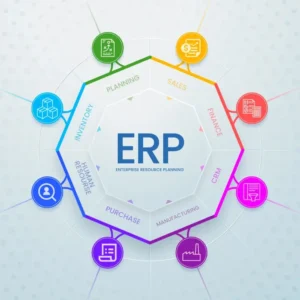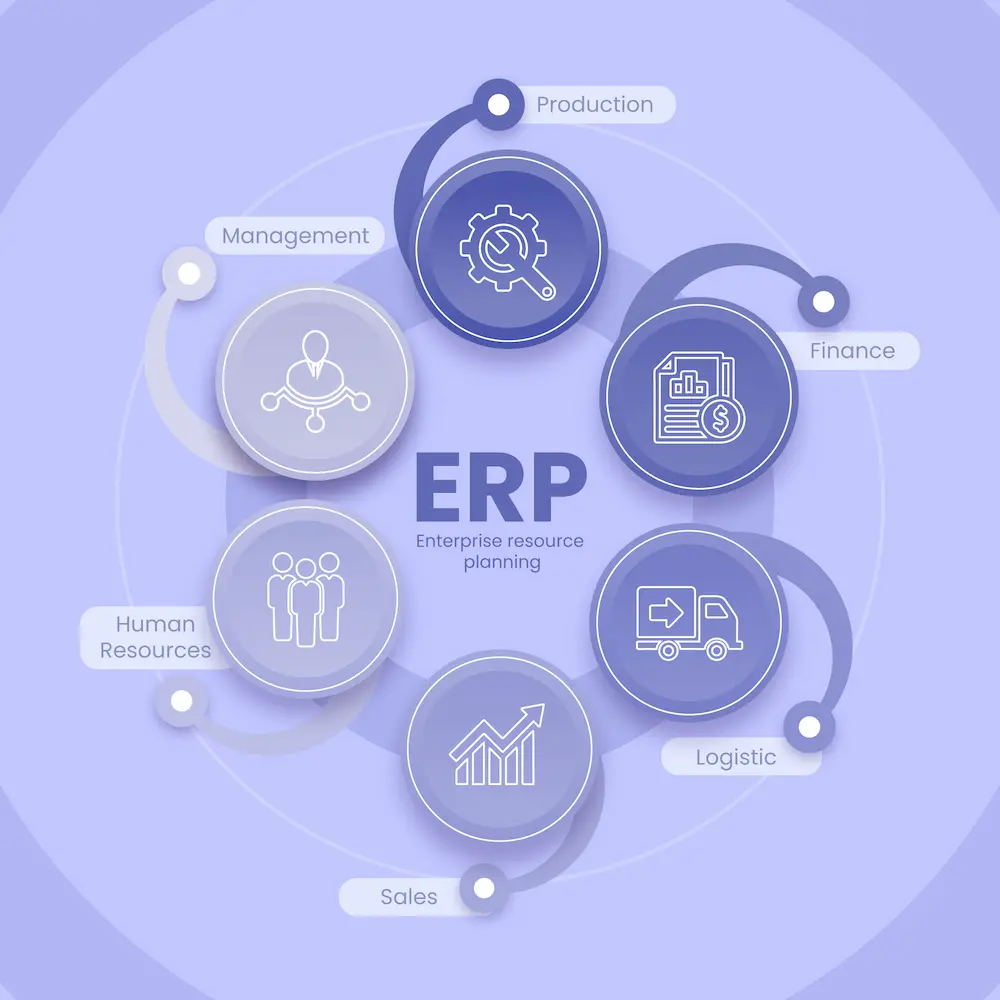
The aerospace and electronics manufacturing industries operate in highly complex and demanding supply chain environments. ERP in Aerospace and Electronics Supply Chain Management helps businesses manage everything from sourcing raw materials and managing suppliers to production planning, inventory control, quality assurance, and delivery with greater accuracy, visibility, and traceability. Even a small error in procurement, production, or inventory management can result in costly delays, compliance issues, or customer dissatisfaction.
An Enterprise Resource Planning (ERP) system helps aerospace and electronics manufacturers connect these processes through a centralized digital platform. For businesses looking to improve operational efficiency, maintain complete traceability, and manage complex manufacturing workflows, ERP provides the foundation for better supply chain management.
For aerospace and electronics manufacturing companies, Jurysoft provides ERP solutions designed to support complex production and supply chain requirements while improving visibility, control, and decision-making.
Understanding Supply Chain Challenges in Aerospace and Electronics Manufacturing
Aerospace manufacturing involves strict quality standards, specialized components, long production cycles, and extensive regulatory requirements. Manufacturers need to track materials, components, suppliers, production stages, inspections, and finished products throughout the entire lifecycle.
Electronics manufacturing also involves complex supply chains. Manufacturers may manage thousands of components, multiple suppliers, changing demand, short product lifecycles, and strict quality requirements.
Common challenges include:
- Limited visibility across procurement and production
- Manual inventory tracking
- Supplier management difficulties
- Material shortages and excess inventory
- Complex production planning
- Lack of real-time operational data
- Quality and compliance challenges
- Difficulty maintaining product traceability
- Delays caused by disconnected systems
An ERP system can address these challenges by bringing critical business processes into one integrated environment.
How ERP Improves Aerospace and Electronics Supply Chain Management
Centralized Supply Chain Data
One of the biggest advantages of ERP is centralized data management. Instead of maintaining information across spreadsheets, separate applications, and manual records, an ERP system provides a single source of information.
Procurement, inventory, production, finance, quality, sales, and supply chain teams can access relevant information from the same system. This improves communication and reduces the risk of duplicate or inconsistent data.
For aerospace and electronics manufacturers, centralized data can provide better visibility into material availability, supplier performance, production progress, and order status.
Better Procurement and Supplier Management
A reliable supplier network is essential for manufacturing businesses. ERP software helps organizations manage purchase orders, supplier information, material requirements, pricing, delivery schedules, and supplier performance.
Manufacturers can use ERP data to identify purchasing trends, monitor supplier delivery performance, and plan procurement according to production requirements.
This helps reduce unnecessary purchases while ensuring that critical materials are available when required.
Real-Time Inventory Management
Inventory management is particularly important in aerospace and electronics manufacturing because many components can be expensive, specialized, or subject to specific storage and traceability requirements.
An ERP inventory management system provides real-time visibility into stock levels, material movements, purchase requirements, and warehouse transactions.
Manufacturers can monitor:
- Raw materials
- Components
- Work-in-progress inventory
- Finished products
- Safety stock
- Batch and lot information
- Material consumption
Better inventory visibility helps organizations reduce stockouts, minimize excess inventory, and improve working capital management.
ERP and Production Planning
Improved Production Scheduling
Production planning becomes challenging when manufacturers handle multiple orders, components, production stages, and delivery deadlines.
An ERP system can connect customer orders with material requirements and production schedules. Production teams can gain better visibility into upcoming requirements and allocate resources accordingly.
This can help manufacturers identify potential bottlenecks before they affect delivery schedules.
Bill of Materials and Material Requirements Planning
A reliable Bill of Materials (BOM) is essential for manufacturing. ERP software can maintain structured BOM information and connect it with purchasing and production requirements.
Material Requirements Planning (MRP) helps determine what materials are required, when they are needed, and how much should be ordered.
For aerospace and electronics companies, this can support more accurate production planning and reduce material shortages.
Traceability and Quality Management
Traceability is a critical requirement in aerospace manufacturing and is also highly important in electronics production.
An ERP solution can help manufacturers maintain records related to materials, batches, lots, suppliers, production operations, inspections, and finished products.
End-to-End Product Traceability
With integrated ERP processes, organizations can track a component from procurement through production and final delivery.
This creates a digital history of manufacturing activities and makes it easier to identify the source of quality issues.
For aerospace manufacturers, this level of traceability can support documentation and compliance requirements. For electronics manufacturers, it can help with component tracking, quality control, and product recalls when necessary.
Quality Control Integration
ERP can integrate quality management activities with procurement and production processes. Quality teams can record inspection results, non-conformances, corrective actions, and quality-related information within the same system.
This reduces dependence on disconnected records and gives management better visibility into quality performance.
Improving Demand Forecasting and Supply Chain Visibility
Demand can change quickly in electronics manufacturing, while aerospace manufacturers often operate with long-term projects and complex order schedules.
ERP systems can provide historical sales, inventory, purchasing, and production data that can support better forecasting and planning.
With improved supply chain visibility, businesses can make informed decisions about:
- Procurement requirements
- Production capacity
- Inventory levels
- Supplier performance
- Customer orders
- Delivery schedules
Instead of relying primarily on manual calculations, decision-makers can use centralized business information to respond faster to changes.
ERP Supports Regulatory Compliance
Aerospace manufacturers must meet demanding industry standards and customer-specific requirements. Maintaining accurate records is essential for demonstrating compliance.
ERP systems can support compliance by organizing important business and manufacturing information, including procurement records, production data, quality inspections, inventory transactions, and traceability information.
For electronics manufacturers, ERP can similarly support documentation, quality processes, component traceability, and internal controls.
While ERP does not automatically guarantee regulatory compliance, it provides the structured data and process controls needed to support compliance programs.
Reducing Operational Costs
An integrated ERP system can help manufacturers identify inefficiencies throughout the supply chain.
Better inventory control can reduce carrying costs. Improved procurement planning can reduce unnecessary purchasing. Automated workflows can reduce administrative work, while better production planning can help minimize downtime and delays.
Over time, these improvements can contribute to lower operational costs and improved profitability.
Why Aerospace and Electronics Manufacturers Need an Integrated ERP
Using separate systems for procurement, inventory, production, quality, finance, and sales can create information gaps. Employees may spend significant time transferring data between systems, while management may lack a complete view of operations.
An integrated ERP for aerospace manufacturing and ERP for electronics manufacturing connects these functions within a unified platform.
This creates a more coordinated workflow from purchasing raw materials to manufacturing products and delivering finished goods to customers.
Choosing the Right ERP Solution
Not every ERP system is suitable for aerospace and electronics manufacturing. Businesses should evaluate ERP solutions based on their specific operational requirements.
Important factors include:
Manufacturing Capabilities
The ERP should support production planning, BOM management, work orders, MRP, scheduling, and shop-floor processes.
Inventory and Traceability
The system should provide detailed inventory visibility and support batch, lot, serial number, and material traceability where required.
Quality Management
Quality inspection, non-conformance tracking, corrective actions, and quality documentation should be integrated with manufacturing workflows.
Scalability
The ERP should be able to grow with the business and support increasing production volumes, users, suppliers, and operational complexity.
Real-Time Reporting
Dashboards and reports should provide management with actionable information about inventory, production, procurement, sales, and financial performance.
The Future of ERP in Aerospace and Electronics Manufacturing
Modern ERP systems are increasingly becoming intelligent platforms rather than simple transaction-management systems. Integration with automation, analytics, cloud technologies, IoT, and AI can provide manufacturers with deeper insights into their operations.
Predictive analytics can help identify potential supply chain disruptions. Automated workflows can reduce repetitive administrative tasks. Real-time dashboards can help management monitor production and inventory performance.
As aerospace and electronics supply chains become more complex, manufacturers will increasingly need connected systems that can support faster, data-driven decisions.
Conclusion
The role of ERP in aerospace and electronics supply chain management extends far beyond basic business administration. A well-designed ERP system connects procurement, inventory, production, quality, finance, and supply chain operations to create greater visibility and control.
For aerospace manufacturers, ERP can support traceability, production planning, quality management, and compliance-related processes. For electronics manufacturers, it can improve component management, inventory accuracy, procurement, production scheduling, and supply chain visibility.
Jurysoft helps aerospace and electronics manufacturing companies implement ERP solutions that align technology with their operational requirements. By connecting critical business processes through an integrated ERP platform, manufacturers can improve efficiency, reduce operational challenges, strengthen supply chain management, and make better business decisions.