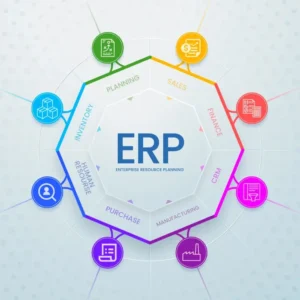
Manufacturing companies today need more than efficient production processes to remain competitive. They must coordinate production planning, quality control, inventory, procurement, suppliers, and delivery schedules while maintaining accuracy across every stage of operations. For aerospace and electronics manufacturers, where precision, traceability, and compliance are especially important, disconnected systems can create costly delays and data gaps.
This is where Manufacturing ERP becomes a valuable solution. An integrated ERP system connects production, quality, inventory, procurement, and supply chain operations through a centralized platform. By bringing critical business information together, manufacturers can improve visibility, reduce manual work, and make faster, data-driven decisions.
What Is Manufacturing ERP?
Manufacturing ERP is an enterprise resource planning solution designed specifically to manage and connect manufacturing operations. Instead of relying on separate software for production, purchasing, inventory, finance, quality, and supply chain activities, an ERP platform brings these functions into one integrated system.
For aerospace and electronics manufacturing companies, ERP software can help manage complex production environments where multiple components, suppliers, processes, and quality requirements must work together.
A connected ERP environment provides teams with access to accurate and up-to-date information, helping them coordinate activities from production planning to final delivery.
Connecting Production Planning With Business Operations
Production planning is one of the most important parts of manufacturing. Companies need to know what needs to be produced, when it needs to be produced, and whether the required materials, machines, and workforce are available.
Better Production Visibility
Manufacturing ERP provides a centralized view of production schedules, work orders, material requirements, and shop-floor activities. Production managers can monitor progress and identify potential bottlenecks before they affect delivery timelines.
Instead of collecting information manually from different departments, teams can access production data through a unified system.
Improved Resource Planning
ERP software can connect production requirements with inventory, procurement, and workforce planning. This helps manufacturers determine whether sufficient materials and resources are available before production begins.
For aerospace and electronics companies, this visibility can be particularly useful when manufacturing involves multiple components and detailed production processes.
Integrating Quality Management Into Manufacturing
Quality cannot be treated as a separate activity that happens only after production. It needs to be incorporated throughout the manufacturing process.
Consistent Quality Monitoring
A manufacturing ERP system can connect quality checks with production processes, allowing businesses to record inspections, non-conformances, corrective actions, and quality-related information in a centralized environment.
This makes it easier for quality teams to identify recurring issues and understand where problems originate.
Supporting Traceability
Traceability is essential for industries that manufacture highly engineered products. ERP systems can help organizations track materials, batches, components, work orders, inspections, and production history.
For aerospace and electronics manufacturers, this level of traceability can support better quality management and help teams respond more efficiently when an issue is identified.
Connecting Inventory With Production Requirements
Inventory management directly affects manufacturing efficiency. Too little inventory can stop production, while excessive inventory can increase storage costs and tie up working capital.
Manufacturing ERP connects inventory information with production and purchasing requirements.
Real-Time Inventory Visibility
Teams can gain better visibility into raw materials, components, work-in-progress inventory, and finished products. This allows purchasing and production teams to make decisions based on current information rather than outdated spreadsheets.
Reducing Material Shortages
When production schedules are connected with material requirements, businesses can identify upcoming shortages earlier. Procurement teams can then plan purchases based on actual production demand.
This can help reduce production interruptions and improve material availability.
Strengthening Procurement and Supplier Management
Manufacturing supply chains often involve multiple suppliers, purchase orders, delivery schedules, and material specifications. Managing these activities through disconnected systems can make it difficult to maintain accurate information.
Streamlined Purchasing
ERP software can connect purchase requirements with inventory and production planning. When materials are required, procurement teams can access relevant information and manage purchasing activities more efficiently.
Better Supplier Visibility
A centralized ERP system can also provide greater visibility into supplier orders, delivery status, purchase history, and supplier-related information. This allows businesses to identify potential supply chain delays and take action earlier.
For aerospace and electronics manufacturers, stronger supplier coordination can help maintain production continuity.
Creating a Connected Manufacturing Supply Chain
A manufacturing supply chain involves much more than purchasing materials. It connects suppliers, inventory, production, quality, logistics, and customers.
Manufacturing ERP helps create a digital connection between these activities.
From Supplier to Customer
With an integrated ERP system, information can flow across the manufacturing lifecycle. Supplier purchases can influence inventory availability, inventory can affect production planning, production data can connect with quality checks, and finished goods can move toward delivery.
This connected approach reduces information gaps between departments.
Faster Decision-Making
When managers can access production, inventory, quality, and supply chain information from one system, they can make decisions faster.
Instead of waiting for different teams to compile reports, decision-makers can use centralized data to understand current operational conditions.
Why ERP Is Important for Aerospace and Electronics Manufacturing
Aerospace and electronics manufacturing environments often require precision, detailed documentation, strict quality processes, and effective material management.
Managing Complex Manufacturing Processes
Aerospace components and electronic products can involve multiple stages, components, suppliers, inspections, and production requirements. ERP software can help organize these activities and provide greater operational visibility.
Improving Compliance and Documentation
Manufacturing ERP can centralize important production and quality records, making it easier for teams to maintain organized documentation and retrieve information when required.
Supporting Business Growth
As manufacturing companies grow, operational complexity usually increases. More customers, products, suppliers, employees, and production orders can make manual processes increasingly difficult to manage.
An ERP platform provides a scalable foundation for managing growing operations.
Key Benefits of Manufacturing ERP
A connected manufacturing ERP system can provide several benefits across an organization:
- Centralized manufacturing data
- Improved production planning
- Better inventory management
- Enhanced quality control
- Stronger supplier coordination
- Improved material traceability
- Reduced manual data entry
- Faster reporting and decision-making
- Better supply chain visibility
- Improved operational efficiency
The biggest advantage is that these functions are connected rather than managed as isolated processes.
Choosing the Right Manufacturing ERP Solution
Selecting an ERP platform requires more than comparing features. Manufacturers should consider whether the system can support their specific production environment and future business requirements.
Important factors include:
Industry-Specific Capabilities
Aerospace and electronics manufacturers should look for ERP capabilities that support complex production processes, quality management, traceability, inventory control, procurement, and supply chain operations.
Integration and Scalability
The ERP system should be capable of integrating with existing business applications and scaling as the company expands.
Data Visibility
A good ERP solution should provide meaningful visibility across departments so managers can access relevant information and make informed decisions.
The Future of Connected Manufacturing
Manufacturing is becoming increasingly digital, and companies are moving toward more connected and data-driven operations. Manufacturing ERP plays an important role in this transformation by bringing different business functions together through a centralized platform.
For aerospace and electronics manufacturers, this connected approach can improve coordination between production, quality, inventory, procurement, and supply chain teams.
Instead of treating each department as a separate operation, ERP helps create a unified manufacturing environment where information can move efficiently across the organization.
Conclusion
Connecting production, quality, and supply chains is essential for manufacturers looking to improve efficiency, visibility, and operational control. Manufacturing ERP provides the foundation for achieving this connection by integrating critical processes into one centralized system.
For aerospace and electronics manufacturing companies, an integrated ERP solution can support production planning, quality management, inventory control, supplier coordination, traceability, and supply chain visibility.
With the right ERP software for manufacturing, companies can reduce information gaps, improve decision-making, and build a more connected and efficient manufacturing operation. Jurysoft helps businesses explore ERP solutions designed around the needs of modern manufacturing environments, supporting organizations as they work toward greater operational visibility and digital transformation.