Intelligent system technology is changing how modern businesses approach automation, decision-making, and digital transformation. Organizations today use AI models, machine learning, business applications, data platforms, and intelligent agents across different departments. While each technology can deliver value independently, the real opportunity comes from connecting these capabilities into a unified Intelligent System that can understand context, coordinate processes, make decisions, and act.
This shift is moving businesses beyond traditional automation toward systems that can continuously interpret information and respond intelligently. For companies looking to build scalable digital operations, the ability to orchestrate distributed intelligence is becoming increasingly important.
What Is an Intelligent System?
An intelligent system is a set of tools built to gather data, sort out the situation, make choices, and carry out tasks with little hand work. It is not just one AI app. It is a setup that links several smart parts so they can function together.
For instance, a company might use one tool to read customer messages. A second tool can estimate future demand. A workflow system can run the approval steps. Other business software can handle the actual payments or orders. If these tools work on their own, the useful facts can end up split up.
With an intelligent system, those abilities are tied together. So what one part learns can be used in the next part, across the full business flow.
The point is not to pile on more AI. The aim is to let the tools share messages, work side by side, and move toward one common target.
Why Distributed Intelligence Needs Orchestration
Big companies usually do not rely on just one tech stack. They mix many tools. Cloud apps are one part. They also use enterprise software, data stores, AI models, and APIs. There are analytics systems too. Then there are automation services that tie things together.
Because of that mix, the work can feel scattered. People might call this distributed intelligence. It is not just one brain. It is many parts that run side by side.
Each part can do its own job. But when nothing pulls it together, the results can get messy. Teams may repeat work. Steps can land in the wrong order. Choices may not match each other. Leaders may also lack clear views of what is happening.
AI orchestration is the glue here. It acts like a coordination layer. It helps connect these abilities so the flow stays on track.
With an orchestration setup, the system can decide things like this.
- Which AI model or agent should do the job
- Which business data can be used
- Which workflow to start
- When a person must sign off
- How details should be sent between systems
- How the response should adjust when conditions change
Done this way, the smart parts become one coordinated system.
Building an Intelligent System with Intelligent Automation Services
More and more companies use automation tools that include AI. They want decisions made by models to flow into everyday tasks.
Old automation usually works from fixed rules. It does not change much when a case is different. Intelligent automation links AI with data and context. It can also adjust its choices as new details show up.
Look at customer support. A system can take in the message. It can figure out what the customer means. Then it can pull the right details. After that, it can choose what reply to send. It can log the change in the CRM. If needed, it can open a new support ticket. When a case is too hard, it can pass the issue to a staff member.
Rather than running each step on its own, the system runs the full flow together.
This is why Jurysoft sees room to grow here. Jurysoft blends AI related tech with automation and software work. The goal is to treat automation as one connected setup, not as separate gadgets.
Creating the Best Intelligent Automation Solutions
The best intelligent automation solutions are not necessarily those with the most AI features. They are solutions designed around real business objectives.
An effective Intelligent System should bring together several essential capabilities:
Context-Aware Intelligence
The system should understand the information surrounding a task. Context allows AI to make more relevant decisions rather than simply responding to isolated inputs.
Intelligent Decision-Making
An Intelligent System should evaluate available information, identify the appropriate action, and apply business rules or AI-driven reasoning where required.
Multi-System Connectivity
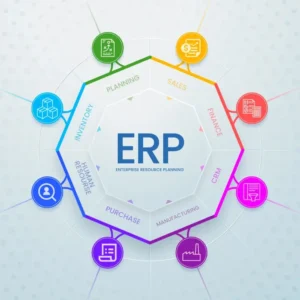
Enterprise intelligence often exists across CRM, ERP, databases, cloud platforms, applications, and APIs. Connecting these systems allows information to move seamlessly across workflows.
AI Agent Coordination
Multiple AI agents can specialize in different functions. One may analyze data, another may interact with customers, while another manages a specific workflow. Orchestration allows these agents to collaborate effectively.
Human-in-the-Loop Capabilities
Not every decision should be fully automated. A well-designed Intelligent System can identify situations that require human expertise and route them for review.
Continuous Improvement
Intelligent systems should be capable of learning from outcomes, feedback, and changing business conditions. This helps organizations improve processes over time.
From Automation to Autonomous Intelligent Systems
The evolution of enterprise technology is moving through several stages.
First came basic rule-based automation. Businesses automated repetitive, predictable tasks using predefined instructions.
Then came intelligent automation, where AI and machine learning introduced capabilities such as prediction, classification, language understanding, and recommendations.
The next stage is the development of interconnected Intelligent Systems that can coordinate multiple AI capabilities and business processes.
This does not mean removing humans from every process. Instead, it means allowing technology to manage increasingly complex coordination while people focus on strategy, creativity, relationships, and high-value decisions.
The difference is significant.
Automation asks:
“Can this task be automated?”
An Intelligent System asks:
“How can intelligence, automation, data, and decision-making work together to achieve the desired outcome?”
The Role of AI Orchestration in Intelligent Systems
AI orchestration is what ties separate AI parts together.
Picture an org with multiple AI agents, business apps, data systems, and task automation. Each piece can do a lot by itself. Still, the results get better when they run together in one setup.
With orchestration, data moves where it should. It also decides what tool or function runs at each step.
For Jurysoft, this is a key path for building intelligent software. The goal is to shift from stand alone AI functions to linked systems. Those systems can coordinate how intelligence is used across the whole company.
So the next step for AI is not only better models. It is also better coordination. Models, agents, apps, and workflows need to work as a single set.
Why Unified Intelligence Matters for Businesses
A unified Intelligent System can provide several business advantages.
Greater efficiency: Connected workflows can reduce repetitive manual work and unnecessary handoffs.
Better decision-making: Combining information from multiple sources can provide a more complete view of business situations.
Improved scalability: Orchestrated systems can coordinate increasing numbers of processes, users, applications, and AI agents.
Faster response: Automated decision and execution cycles can help businesses respond to customers and operational changes more quickly.
Better visibility: Centralized orchestration can provide greater insight into how intelligent workflows operate.
More consistent processes: A coordinated system can apply business logic and organizational policies consistently across workflows.
These benefits make intelligent architecture increasingly relevant to organizations planning long-term AI adoption.
Jurysoft’s Perspective on the Future of Intelligent Systems
At Jurysoft, the future of software is not simply about adding AI to existing applications. It is about creating intelligent ecosystems where AI, automation, data, applications, and human expertise work together.
The transformation from distributed intelligence to a unified Intelligent System requires thoughtful architecture, strong integration, reliable data flows, and purposeful AI orchestration.
Organizations that approach AI as a collection of disconnected tools may struggle to capture its full potential. Organizations that build connected intelligent ecosystems can create a foundation for more adaptive and scalable operations.
The next generation of enterprise software will increasingly be defined by how effectively different forms of intelligence work together.
An intelligent System is not just a collection of intelligent technologies. It is the orchestration of those technologies into a system that can understand, decide, coordinate, and act.
And that is where the real transformation begins—with distributed intelligence becoming one unified intelligent system.