Aerospace and electronics manufacturing are among the most complex and technology-driven industries today. Manufacturers must manage strict quality standards, detailed production processes, complex supply chains, inventory requirements, and constantly changing customer demands. Managing these operations manually or through disconnected systems can lead to delays, errors, higher costs, and reduced productivity.
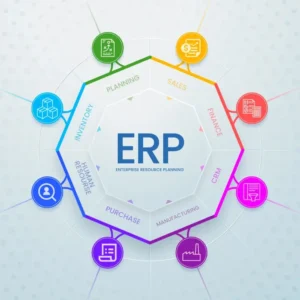
This is where ERP technology is becoming increasingly important. An Enterprise Resource Planning system connects critical business functions into a centralized platform, allowing manufacturers to manage production, inventory, procurement, finance, quality, and supply chain operations more efficiently.
For aerospace and electronics manufacturers, a specialized ERP system for manufacturing can provide the visibility and control needed to improve operations and remain competitive in a rapidly evolving industry.
Why ERP Is Important for Aerospace and Electronics Manufacturing
Aerospace and electronics companies operate in environments where precision, traceability, and efficiency are essential. A small production error or supply chain disruption can have significant consequences.
Traditional systems often keep information across spreadsheets, separate software applications, and manual records. This makes it difficult for teams to access accurate information quickly.
Managing Complex Manufacturing Processes
Aerospace manufacturing involves multiple production stages, specialized components, strict specifications, and detailed documentation. Electronics manufacturing also requires accurate component management, production scheduling, testing, and quality control.
An ERP for aerospace manufacturing can bring these processes together within one integrated system. Manufacturers can monitor production activities, track materials, manage work orders, and access important operational information from a centralized platform.
Improving Data Visibility
One of the major advantages of ERP technology is centralized data. Instead of relying on multiple disconnected systems, employees can access updated information through a single platform.
This enables management teams to make faster decisions based on real-time information about inventory, production, purchasing, sales, and financial performance.
How ERP Technology Is Transforming Aerospace Manufacturing
The aerospace industry requires exceptional levels of accuracy and traceability. ERP technology helps manufacturers manage these requirements while improving operational efficiency.
Better Production Planning
Aerospace production often involves long manufacturing cycles and complex bills of materials. ERP software can help production teams plan materials, resources, work orders, and schedules more effectively.
With improved planning, manufacturers can reduce production bottlenecks and make better use of available resources.
Enhanced Traceability
Traceability is essential in aerospace manufacturing. Companies need to know where materials and components came from, how they were processed, and where they were used.
An aerospace manufacturing ERP system can help maintain detailed records throughout the production lifecycle. This makes it easier to track components, batches, work orders, and quality information.
Stronger Quality Management
Quality control is a critical part of aerospace production. ERP systems can integrate quality processes with purchasing, inventory, production, and supplier management.
This helps manufacturers identify quality issues earlier and maintain consistent production standards.
How ERP Is Improving Electronics Manufacturing
Electronics manufacturing requires accurate inventory management, fast production cycles, and careful component tracking. ERP technology can help manufacturers respond to these challenges.
Efficient Component and Inventory Management
Electronic products can contain hundreds or even thousands of individual components. Managing these components manually can increase the risk of shortages, excess inventory, and production delays.
An electronics manufacturing ERP can provide better visibility into stock levels, material requirements, purchase orders, and consumption.
This helps manufacturers maintain appropriate inventory levels while reducing unnecessary costs.
Smarter Production Scheduling
Demand can change quickly in the electronics industry. ERP software can help production teams adjust schedules according to customer orders, material availability, production capacity, and delivery requirements.
This creates a more responsive manufacturing environment.
Reducing Production Errors
Integrated ERP systems can connect product information, bills of materials, work orders, inventory, and quality processes. By reducing manual data entry and disconnected workflows, manufacturers can minimize errors and improve operational consistency.
Key Benefits of ERP Technology for Manufacturers
Implementing the right ERP platform can provide benefits across multiple areas of manufacturing operations.
Real-Time Business Insights
ERP dashboards can provide management with information about production performance, inventory, purchasing, sales, and financial activities.
Instead of waiting for reports to be prepared manually, decision-makers can access important information more quickly.
Improved Supply Chain Management
Aerospace and electronics manufacturers often depend on extensive supplier networks. Delays in raw materials or components can directly affect production schedules.
An ERP supply chain management system can help companies monitor purchasing activities, supplier information, inventory levels, and material requirements.
Better Cost Control
ERP technology can help manufacturers monitor production costs, material expenses, labor requirements, and operational spending. This provides greater visibility into where resources are being used and where improvements may be possible.
Increased Operational Efficiency
By automating repetitive administrative processes and connecting departments, ERP systems can reduce manual work and improve communication between teams.
Procurement, production, inventory, finance, sales, and management can work with connected information rather than operating in isolated systems.
The Role of ERP in Smart Manufacturing
The future of manufacturing is moving toward greater automation, connected systems, and data-driven decision-making. ERP technology plays an important role in this transformation.
Integration With Modern Technologies
Modern ERP platforms can work alongside technologies such as IoT, automation, analytics, cloud computing, and artificial intelligence.
For example, production data collected from connected equipment can potentially be integrated with ERP systems to provide better visibility into manufacturing performance.
Cloud-Based ERP Solutions
Cloud ERP provides manufacturers with flexible access to business information without relying entirely on traditional on-premise infrastructure.
For organizations with multiple facilities, suppliers, or distributed teams, cloud-based ERP can make it easier to access centralized information across locations.
Choosing the Right ERP for Aerospace and Electronics Manufacturing
Not every ERP solution is designed to handle the specific requirements of advanced manufacturing industries. Aerospace and electronics companies should evaluate an ERP platform based on their operational requirements.
Important capabilities may include:
- Production planning and scheduling
- Inventory and material management
- Bill of materials management
- Procurement management
- Quality management
- Supplier management
- Work order tracking
- Financial management
- Product and component traceability
- Reporting and analytics
- Business process automation
A scalable ERP software for aerospace and electronics manufacturing should also be capable of adapting as the organization grows and production requirements evolve.
The Future of Manufacturing With ERP Technology
ERP technology is no longer simply a back-office business management tool. It is becoming an important part of modern manufacturing infrastructure.
For aerospace manufacturers, ERP can support traceability, quality management, production planning, and supply chain visibility. For electronics manufacturers, it can improve component management, inventory control, production scheduling, and operational efficiency.
As manufacturing becomes increasingly connected and data-driven, companies that effectively use ERP technology can gain better visibility into their operations and respond more quickly to changing market requirements.
Conclusion
The future of aerospace and electronics manufacturing will depend heavily on technology, automation, data, and operational efficiency. ERP technology provides manufacturers with a centralized platform for connecting critical business processes and improving decision-making.
From production planning and inventory management to quality control and supply chain operations, ERP can help organizations create more efficient and transparent manufacturing environments.
For companies looking to modernize their manufacturing operations, investing in a reliable ERP solution for aerospace and electronics manufacturing can be an important step toward building a more scalable, connected, and efficient business.
Jurysoft provides ERP solutions designed to help manufacturing businesses manage their operations through integrated technology and smarter business processes. Contact Jurysoft to explore how an ERP solution can support your aerospace or electronics manufacturing requirements.