Medication non-adherence is a serious global health issue, leading to worsened conditions, increased hospitalizations, and higher healthcare costs. As an app development company, Jurysoft recognizes the transformative potential of a well-built medication reminder app. This guide walks you through the essential features, wearable integration, and optimal tech stack for creating a life-changing health application.
Why Build a Medication Reminder App?
The market for medication management apps is growing rapidly, driven by an aging population, the rise of chronic disease management, and increased digital health awareness. A reliable app not only serves a critical need but also establishes your brand as a trusted player in the healthtech and mHealth (mobile health) space.
Core Features for a Successful Medication Reminder App
1. User Profile & Medication Dashboard
- Personalized Profiles: Allow users to input their name, health conditions, and emergency contacts.
- Medication Catalog: Enable easy addition of drugs with name, dosage, form (pill, liquid, injection), and strength. Include a barcode scanner for quick entry.
- Visual Medication Log: Use icons or images of pills for easy identification, especially for users managing multiple medications.
2. Intelligent Reminder & Scheduling System
- Flexible Scheduling: Support multiple dosage times per day, specific days of the week, and “as-needed” medications.
- Customizable Alerts: Implement push notifications with adjustable sounds, vibrations, and snooze options.
- Missed Dose Alerts: Send follow-up notifications if a dose is not confirmed.
3. Adherence Tracking & Reporting
- Visual Progress: Provide charts and calendars showing adherence history (taken, missed, skipped).
- Shareable Reports: Generate weekly or monthly PDF reports for healthcare providers or family members.
- Achievements & Motivation: Incorporate gamification like streaks or badges to encourage consistent use.
4. Medication Information & Safety
- Drug Database Integration: Partner with or use APIs from reputable sources (like NIH or FDA) to provide reliable drug information, side effects, and interactions.
- Interaction Checker: A vital feature that alerts users to potential dangerous interactions between their listed medications.
5. Data Security & Backup
- HIPAA/GDPR Compliance: Implement robust encryption for data at rest and in transit. Health data is extremely sensitive.
- Cloud Sync & Backup: Allow users to back up their data securely and restore it across devices.
The Game-Changer: Wearable Device Synchronization
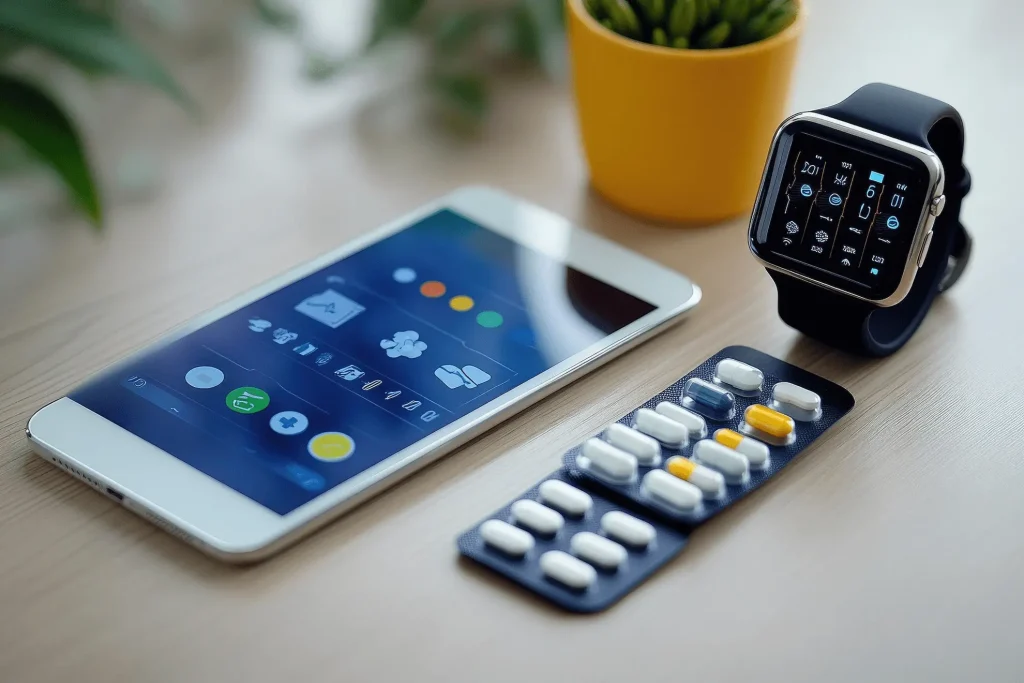
Integrating with wearable technology like Apple Watch, Wear OS, and Fitbit devices significantly enhances user experience and adherence.
- Always-Accessible Reminders: Users get discreet haptic taps and alerts directly on their wrist, ensuring they never miss a dose even if their phone isn’t nearby.
- Voice-Activated Logging: Enable dose confirmation via simple voice commands to smartwatches.
- Health Data Correlation: Sync with the wearable’s native health app (Apple Health, Google Fit) to correlate medication intake with vitals like heart rate or sleep patterns, offering deeper health insights.
- Development Consideration: Use the native SDKs (WatchKit for iOS, Wear OS API for Android) and ensure a seamless, battery-efficient sync between the mobile and wearable app components.
Recommended Tech Stack for Development
Choosing the right technology stack balances performance, development speed, and scalability.
For Native Development:
- iOS: Swift with SwiftUI for a modern, declarative UI framework. Use HealthKit for wearable and health data integration.
- Android: Kotlin with Jetpack Compose. Use Wear OS API and Google Fit for wearable integration.
For Cross-Platform Development:
- Flutter (Dart): Excellent for building high-performance, beautiful UIs for both iOS and Android from a single codebase. Offers good plugin support for notifications and health APIs.
- React Native (JavaScript): A robust choice if your team is proficient in JavaScript. Leverages a large ecosystem of libraries for features like push notifications.
Backend & APIs:
- Backend Framework: Node.js, Python (Django), or Ruby on Rails for building a scalable API.
- Database: PostgreSQL or MySQL for relational data; consider Firebase Firestore for a real-time, NoSQL approach.
- Cloud Provider: AWS, Google Cloud, or Microsoft Azure for reliable hosting, storage, and push notification services (AWS SNS, Firebase Cloud Messaging).
- Third-Party APIs: Integrate with Twilio for SMS reminders, Medication APIs for drug information, and OAuth for secure social logins.
Development Roadmap & Best Practices
- Market Research & Planning: Define your target audience (e.g., seniors, chronic disease patients) and core value proposition.
- UI/UX Design: Prioritize accessibility. Use large fonts, high-contrast colors, and intuitive navigation. Conduct usability testing with your target demographic.
- Agile Development: Build a Minimum Viable Product (MVP) with core reminder and tracking features first. Iterate based on user feedback.
- Rigorous Testing: Conduct thorough testing—especially for notification reliability and data accuracy in drug interactions. Test on various devices and wearables.
- Launch & Compliance: Launch on App Store and Google Play. Ensure your privacy policy clearly outlines data usage and complies with regional health data regulations.
- Post-Launch: Plan for regular updates, feature additions, and robust customer support.
Conclusion
Building a medication reminder app is a impactful project that blends technical expertise with a deep understanding of user needs in the digital health landscape. Success hinges on a thoughtful feature set, seamless wearable app integration, a robust and compliant tech stack, and an unwavering focus on the user’s well-being.
Ready to build an app that makes a difference? As an experienced app development company, Jurysoft specializes in creating secure, user-friendly, and impactful health tech solutions. From ideation to launch and beyond, we can help you bring your medication reminder app to life.
Contact Jurysoft today for a free consultation on your health app development project.