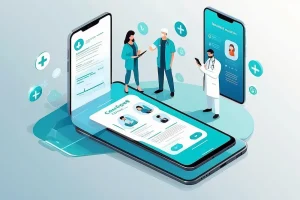
Digital transformation in healthcare is moving faster than ever, and one technology leading the revolution is Electronic Health Records app development. Hospitals, clinics, and medical practitioners now rely on secure EHR and EMR apps to manage patient records efficiently, reduce errors, and provide seamless care.
If you are a healthcare provider or a business planning to build a medical records system, this detailed guide will help you understand everything about EHR/EMR app development, including features, benefits, cost, compliance requirements, and tech stack.
What Is an EHR App?
An Electronic Health Record (EHR) app is a digital platform that stores, manages, and shares patient medical information electronically. It includes data such as:
- Patient demographics
- Medical history
- Prescriptions
- Lab reports
- Allergies
- Treatment plans
- Immunization records
Unlike manual files or basic hospital databases, a modern EHR app is secure, cloud-based, and accessible anytime by authorized healthcare professionals.
Why EHR App Development Is Important in Modern Healthcare
Developing an EHR system has become essential because it:
✔ Improves patient care
Doctors get instant access to accurate patient history and avoid treatment mistakes.
✔ Enables real-time data sharing
With cloud-based healthcare apps, multiple specialists can collaborate.
✔ Reduces administrative burden
Automates documentation, charting, billing, and reporting.
✔ Ensures better accuracy
Prevents errors caused by manual record-keeping.
✔ Supports telemedicine and remote care
EHR apps integrate smoothly with teleconsultation platforms.
Key Features of an Electronic Health Records (EHR) App
To build a successful EHR/EMR app, these features are essential:
1. Patient Profile Management
Secure storage of complete patient medical history, demographics, and clinical notes.
2. Appointment Scheduling & Calendar
Doctors and patients can manage appointments easily.
3. Medical Documentation & Charting
Easy tools for doctors to enter clinical notes, diagnosis, and treatment plans.
4. E-Prescriptions
Generate and share digital prescriptions with pharmacies.
5. Lab Integration
Receive lab reports automatically within the EHR system.
6. Billing & Insurance Management
Automated billing, claims submission, and payment tracking.
7. Real-Time Data Sharing
Enable doctors, nurses, and specialists to view and update records.
8. Secure Access Controls
Role-based authentication, encryption, and secure login.
9. Telemedicine Integration
Video consultation, chat, and remote monitoring.
10. Analytics & Reporting
Track patient trends, diagnosis patterns, and hospital performance.
Advanced Features for Next-Gen EHR App Development
If you want your EHR solution to stand out, include:
✔ AI-Powered Diagnostics
AI can support doctors in identifying risk patterns and providing treatment suggestions.
✔ Voice-Based Note Taking
Speech-to-text helps doctors reduce charting time.
✔ IoT Device Integration
Sync data from wearables like BP monitors, glucose trackers, and ECG devices.
✔ Blockchain for Data Security
Adds an extra layer of protection and tamper-proof medical record storage.
Compliance & Security Standards You Must Follow
EHR applications must follow strict healthcare regulations. An experienced healthcare app development company like Jurysoft ensures compliance with:
- HIPAA (for patient data protection)
- HL7 & FHIR (for data standardization)
- GDPR (for data privacy in EU regions)
- ISO/IEC 27001 (information security standards)
These guidelines ensure data confidentiality, integrity, and secure interoperability between systems.
Tech Stack for EHR App Development
A powerful tech stack ensures performance, scalability, and security.
Frontend:
React, Angular, Vue.js
Backend:
Node.js, Python (Django/Flask), Java, .NET
Database:
MongoDB, PostgreSQL, MySQL
Cloud:
AWS, Google Cloud, Azure
Mobile:
Flutter, React Native, Swift, Kotlin
Security:
Data encryption, JWT authentication, SSL
How Much Does It Cost to Develop an EHR App?
The EHR app development cost depends on features, platform, complexity, and integrations.
Factors Affecting Cost:
- Number of features
- Web + Mobile development
- AI or IoT integrations
- Cloud infrastructure
- Security and regulatory compliance
- Maintenance & updates
Jurysoft offers customized EHR app development depending on your business requirements.
Benefits of Partnering with Jurysoft for EHR App Development
Jurysoft is a trusted healthcare app development company delivering robust, scalable, and compliant EHR/EMR solutions.
Why Choose Jurysoft?
- Expertise in HIPAA-compliant app development
- Secure, scalable, cloud-based EHR solutions
- Custom features for hospitals, clinics, and labs
- Experienced team in healthcare mobility solutions
- End-to-end development: UI/UX → Development → QA → Deployment
Conclusion
EHR app development is transforming modern healthcare by improving efficiency, accuracy, and patient outcomes. With rising digital adoption, building an EHR app is not just an improvement—it’s a necessity for medical businesses.
Partnering with an experienced development company like Jurysoft ensures your EHR solution is secure, user-friendly, compliant, and built for long-term growth.