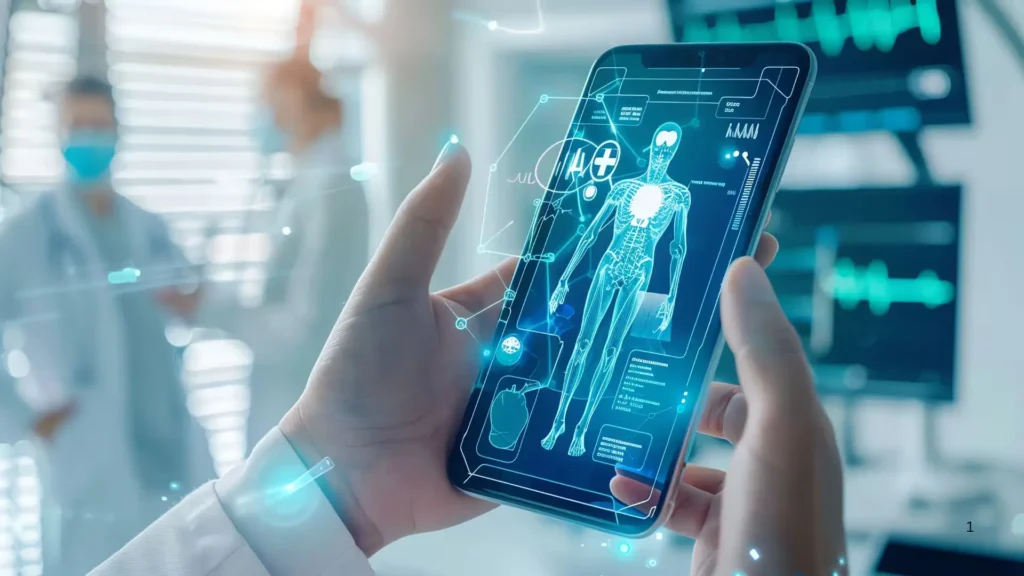
In an increasingly interconnected world, access to quality healthcare remains uneven — especially across linguistic and cultural boundaries. As mobile usage continues to surge across emerging markets, there’s a growing need for healthcare solutions that are both intelligent and inclusive. Multilingual AI health assistants are emerging at the forefront of this transformation, improving how patients access care, understand their conditions, and engage with health professionals.
At Jurysoft — an app development company in Bangalore — we believe technologies like AI and natural language processing (NLP) can break language barriers and help deliver better global healthcare access. In this blog, we explore what multilingual AI health assistants are, why they matter, and how to build them effectively.
Check out our related insight:
👉 AI Health Assistants vs Traditional Health Apps — https://jurysoft.com/blog/app-development/healthcare/ai-health-assistants-vs-traditional-health-apps/
🌍 Why Multilingual AI Health Assistants Matter
Traditional healthcare access is often limited by geography, cost, and language. Patients seeking medical advice online may be blocked by:
- Lack of support for their native language
- Inability to understand complex medical terminology
- Limited access to trained healthcare professionals
Multilingual AI health assistants help solve these gaps by offering:
✅ Accessible Conversations in Native Languages
AI assistants can be programmed to understand and respond in multiple languages — from English and Spanish to Hindi, Mandarin, Swahili, and beyond — making medical guidance more inclusive and understandable.
✅ Scalable Health Support
Healthcare professionals are limited in number and reach. AI assistants can scale to serve millions of users simultaneously, reducing wait times and easing strain on health systems.
✅ 24/7 Availability
Health concerns don’t wait. AI-driven assistants can provide continuous support — triaging symptoms, offering care navigation, or suggesting next steps based on user inputs.
Key Technologies Behind Multilingual Health Assistants
Building an effective multilingual AI health assistant requires a combination of advanced technologies:
🔹 Natural Language Processing (NLP)
NLP allows the assistant to understand and generate human language. When extended for multilingual use, NLP engines must accurately interpret different languages while maintaining clinical accuracy.
🔹 Speech Recognition & Synthesis
For voice-based interactions, ASR (Automatic Speech Recognition) and TTS (Text-to-Speech) models must support multiple languages and dialects.
🔹 Knowledge Bases & Clinical Logic
To be medically useful, assistants should integrate verified clinical knowledge and evidence-based protocols. Partnering with healthcare domain experts is critical.
🔹 Machine Learning Models
These models help personalize interactions based on user history, preferences, and predicted needs — improving accuracy and user experience over time.
Core Design Considerations
📌 Cultural Sensitivity
Healthcare advice isn’t just about language — it must also consider cultural norms. For example, approaches to mental health support vary widely by region.
📌 Localization Beyond Translation
Translation alone isn’t enough. True localization ensures that health content aligns with local healthcare systems, practices, and regulatory requirements.
📌 Simplicity & Clarity
Healthcare topics can be complex. The assistant’s language must be easy to understand without oversimplifying important information.
Privacy, Compliance, and Safety
Since personal health data is sensitive, developers must ensure:
- HIPAA compliance (for users in the U.S.)
- GDPR compliance (for users in the EU)
- Adherence to local data protection regulations in each target market
- Transparent consent processes and secure data architecture
Developers should prioritize encryption, anonymization, and secure storage.
Steps to Build Multilingual AI Health Assistants
1. Define Use Cases
Decide whether the assistant will handle symptom check, appointment scheduling, medication reminders, mental health support, or all of the above.
2. Choose the Right Tech Stack
Select NLP frameworks and speech APIs that support the target languages and dialects.
3. Train on Localized Datasets
Use diverse and ethically sourced datasets to train models for each language and cultural context.
4. Iterate with Real‑World Testing
Pilot the assistant with real users across different regions to identify gaps and refine performance.
5. Launch & Monitor Continuously
Deploy the assistant with analytics to monitor usage, errors, and outcomes — then iterate for improvements.
The Future of Global AI Health Assistants
As AI models become more sophisticated and computing more ubiquitous, multilingual health assistants will play a crucial role in democratizing healthcare access. They have the potential to:
- Reduce the burden on healthcare systems
- Empower patients with reliable information in their native language
- Support better health literacy worldwide
By embracing multilingual development and culturally aware design, innovators can help ensure that quality healthcare goes beyond borders — one conversation at a time.
If you’re planning to build an intelligent, language‑inclusive health assistant, Jurysoft — with mobile app expertise based in Bangalore — can help transform your idea into reality. Contact us to explore AI‑powered healthcare solutions designed for global impact!