When Manufacturing Growth Creates Operational Complexity
Growth is generally a positive sign for any manufacturing business. More customer orders, increasing production volumes, and expanding product lines indicate that the business is moving forward. However, growth also introduces operational challenges that can become difficult to manage without the right systems.
Consider a manufacturing company handling multiple customer orders, hundreds of components, different product configurations, and several production activities simultaneously.
As operations expand, production managers need accurate information about material availability, machine capacity, production schedules, and order priorities. Procurement teams need to know what materials must be purchased and when. Finance teams require accurate production costs, while management needs a clear understanding of overall business performance.
When these departments operate using separate spreadsheets, standalone applications, and manual communication, information gaps become inevitable.
Production schedules may not reflect actual inventory levels. Purchase orders may be raised without considering current material requirements. Changes in product designs may not reach the shop floor on time. Management may also struggle to determine the actual cost and profitability of individual products.
This was the situation faced by an illustrative manufacturing company that decided to transform its operations through an integrated ERP for manufacturing.
The company’s objective was not simply to automate individual activities. It wanted to establish a connected manufacturing environment where departments could work with consistent information, monitor operational activities, and make better business decisions.
Company Background: A Growing Manufacturing Business
The company, referred to as Apex Precision Components Pvt. Ltd., is a fictional mid-sized manufacturer specialising in precision-engineered industrial components and customised mechanical assemblies.
Its product portfolio includes machined components, fabricated assemblies, and customised parts supplied to industrial equipment manufacturers.
The company operates a multi-stage manufacturing environment involving:
- Raw material procurement and inspection.
- Component machining and fabrication.
- Assembly and sub-assembly operations.
- Quality inspection and testing.
- Finished goods storage and dispatch.
As its customer base expanded, the company began handling more product variations, tighter delivery commitments, and increasingly complex production requirements.
However, its existing business management approach had not evolved at the same pace.
Production planning was maintained through spreadsheets, inventory records were updated separately, purchase activities relied on manual communication, and financial information was maintained in a standalone accounting system.
Although individual departments were performing their responsibilities, the business lacked a unified view of its manufacturing operations.
Management recognised that continuing with disconnected systems would make future expansion increasingly difficult.
The Challenges: Operational Problems Before ERP Implementation
Before adopting Manufacturing ERP Software, Apex Precision Components experienced several interconnected operational problems.
1. Disconnected Departmental Information
Production, procurement, inventory, sales, and finance maintained separate records.
When a customer order was received, the sales team communicated the requirements to production. Production planners then checked material availability through inventory reports or direct communication with warehouse personnel.
This process created information delays and inconsistencies.
For example, production might schedule an order based on an outdated stock report, only to discover that certain components were unavailable.
The absence of a common information platform made coordination difficult and affected decision-making across departments.
2. Inaccurate Inventory Records
The company struggled to maintain accurate stock information.
Material receipts, warehouse transfers, production issues, and finished goods movements were recorded manually or updated at different intervals.
Consequently, the inventory records did not always reflect the actual physical stock.
This created two major problems:
- Production delays when required materials were unavailable despite being shown as available.
- Excess purchasing when procurement teams ordered materials that were already available in the warehouse.
These discrepancies increased inventory management costs and affected production continuity.
3. Inefficient Production Planning
Production planning depended heavily on spreadsheets and the experience of individual planners.
The company found it difficult to coordinate customer delivery dates, machine availability, workforce capacity, and material requirements.
When urgent orders arrived or production priorities changed, planners had to manually revise schedules and communicate the changes to different departments.
Without integrated production planning software, identifying the impact of these changes became time-consuming.
4. BOM Revision and Material Management Issues
Bill of Materials (BOM) management was another significant challenge.
The company maintained product structures and component requirements in separate files. When engineering changes were introduced, revised information was not always communicated consistently.
In some situations, production teams risked referring to outdated component specifications or material requirements.
This increased the possibility of incorrect material consumption, rework, and production inconsistencies.
5. Limited Work-in-Progress Visibility
Once materials entered production, management had limited visibility into their movement across different manufacturing stages.
It was difficult to identify:
- Which production orders were currently active.
- Which operations had been completed.
- Where unfinished products were waiting.
- Which jobs were delayed.
- How much work remained before order completion.
This lack of real-time production tracking made it challenging to identify bottlenecks and respond to delays.
6. Procurement Delays and Reactive Purchasing
Procurement activities were largely reactive.
Purchase teams often received material requirements through emails, spreadsheets, or direct requests from production.
Because purchasing was not connected to production schedules and inventory availability, the company struggled to anticipate material shortages.
This occasionally resulted in urgent purchases, delayed production, and additional procurement effort.
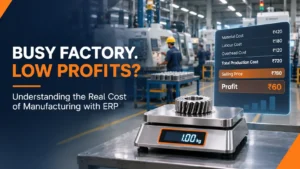
7. Inaccurate Product Costing
The company faced difficulties calculating the actual cost of manufactured products.
Material consumption, labour expenses, machine-related costs, and overhead allocations were maintained across different records.
As a result, management often relied on estimated costs rather than consolidated production cost information.
This affected pricing decisions, quotation accuracy, and product profitability analysis.
8. Manual Reporting and Data Duplication
Management reports required information from multiple departments.
Employees spent considerable time collecting spreadsheets, verifying figures, consolidating data, and preparing operational reports.
By the time reports reached management, some information was already outdated.
The company needed a more reliable way to access operational performance information without depending on repeated manual data collection.
Why the Company Decided to Implement Manufacturing ERP Software
Initially, the company attempted to address these issues by improving spreadsheets and introducing additional standalone applications.
However, these measures addressed individual problems rather than the underlying issue: disconnected business processes.
Management realised that adding more software would not necessarily improve coordination if the applications could not exchange information effectively.
The company therefore decided to evaluate ERP software for manufacturing companies.
Its primary requirement was a centralised platform capable of connecting production, procurement, inventory, warehouse management, quality, sales, and finance.
The expected solution needed to:
- Provide a unified view of manufacturing operations.
- Improve production planning and material availability.
- Maintain accurate inventory information.
- Establish controlled BOM and revision management.
- Monitor work-in-progress across production stages.
- Improve actual manufacturing cost visibility.
- Reduce repetitive manual data entry.
- Provide consolidated reports for management.
The objective was to move from department-specific information management towards integrated manufacturing process automation.
The ERP Implementation: Connecting Manufacturing Operations
The company adopted a phased Manufacturing ERP implementation approach, beginning with an assessment of existing workflows, operational requirements, and information gaps.
Rather than implementing software without understanding its processes, the project focused on aligning ERP functionality with actual manufacturing activities.
The following capabilities formed the foundation of its integrated manufacturing environment.
1. Production Planning and Control
Previously, production schedules were prepared manually without a consolidated view of material availability and production capacity.
The ERP system introduced integrated production planning and control.
Production orders could be planned based on customer demand, manufacturing requirements, available resources, and operational priorities.
Production managers gained better visibility into scheduled activities and could identify potential conflicts before they affected delivery commitments.
Operational improvement: Better coordination of production activities and more structured scheduling.
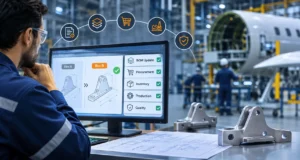
2. Bill of Materials (BOM) Management
The ERP system centralised product structures, component details, quantities, and manufacturing requirements.
Controlled BOM management helped establish a consistent reference for production and material planning.
Revision control also improved visibility into engineering changes, helping ensure that authorised product structures were used for relevant production orders.
Operational improvement: Better control over component requirements, reduced dependence on disconnected BOM files, and improved manufacturing accuracy.
3. Material Requirement Planning (MRP)
Previously, purchasing decisions were based on manually collected requirements.
With Material Requirement Planning (MRP), material requirements could be evaluated against production demand, BOM quantities, existing inventory, and procurement information.
The system helped identify:
- Required raw materials.
- Available stock.
- Material shortages.
- Planned purchasing requirements.
- Materials needed for upcoming production orders.
Operational improvement: More proactive procurement planning and better material availability management.
4. Inventory and Warehouse Management
The implementation introduced centralised inventory management ERP capabilities.
Material receipts, issues, transfers, and stock movements could be recorded within the integrated system.
Warehouse teams gained better visibility into material availability and stock movements.
Production and procurement departments could refer to common inventory information instead of maintaining separate stock records.
Operational improvement: Improved stock visibility, better inventory control, and reduced information discrepancies.
5. Purchase and Procurement Management
Procurement activities were connected with material requirements and production planning.
Purchase teams could review identified shortages, prepare purchase requests, manage supplier orders, and monitor purchasing activities.
This helped reduce dependence on unstructured communication between production and procurement.
Operational improvement: More organised purchasing activities and improved coordination between procurement and manufacturing.
6. Shop Floor Management
Shop floor management capabilities helped connect planned manufacturing activities with actual production execution.
Production teams could record operational progress, job updates, resource usage, and production activities within the system.
Supervisors gained better visibility into the status of manufacturing operations.
Operational improvement: Improved communication between production planning and shop floor teams.
7. Work-in-Progress Tracking
The ERP system improved visibility into products moving through different manufacturing stages.
Production managers could monitor job status, completed operations, pending activities, and unfinished quantities.
This made it easier to identify delays and understand where production orders were spending additional time.
Operational improvement: Better control over WIP and improved identification of production bottlenecks.
8. Quality Management
Quality management capabilities supported inspection activities across relevant manufacturing stages.
Quality records, inspection results, and non-conformance information could be maintained within the integrated environment.
This helped connect quality-related information with manufacturing activities rather than treating quality records as isolated documentation.
Operational improvement: Better inspection traceability and improved visibility into manufacturing quality issues.
9. Manufacturing Costing and Financial Management
The ERP solution connected manufacturing information with financial records.
Material consumption, labour-related costs, and applicable production overheads could be considered in manufacturing cost calculations.
Management gained a more consolidated understanding of production expenses and product cost components.
This supported better quotation preparation, cost comparison, and profitability analysis.
Operational improvement: Improved manufacturing cost visibility and more informed financial decisions.
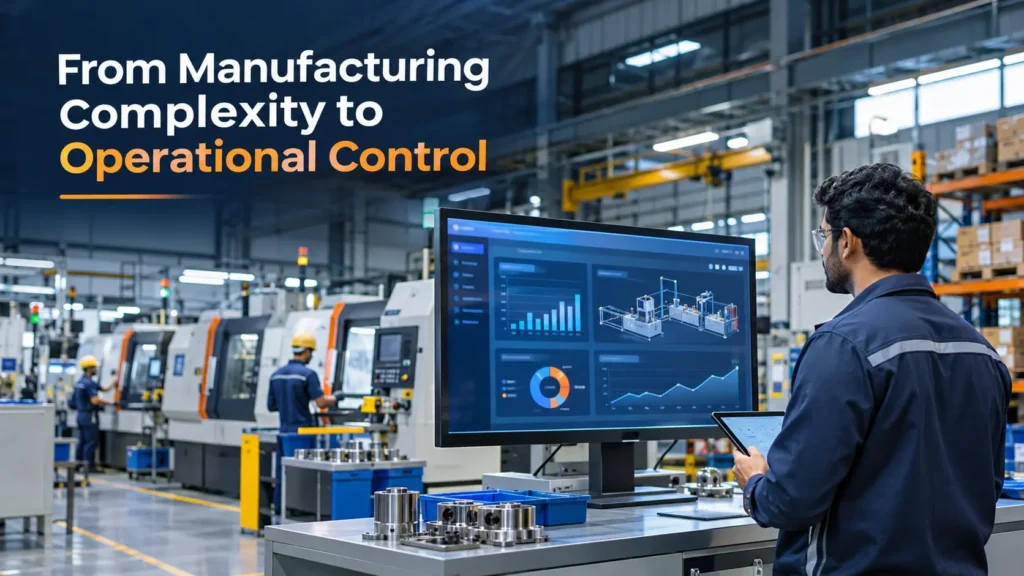
10. MIS and Business Intelligence
Previously, management depended on manually prepared reports.
The ERP implementation introduced consolidated management information and operational reporting capabilities.
Depending on the configured system and available data, management could review information related to:
- Production order status.
- Inventory availability.
- Material consumption.
- Purchase order progress.
- Production performance.
- Quality-related activities.
- Manufacturing costs.
- Sales and financial performance.
Operational improvement: Faster access to business information and improved management visibility.
Before ERP vs After ERP: The Operational Transformation
The integrated ERP environment changed how different departments accessed information and coordinated their activities.
| Operational Area | Before ERP | After ERP |
|---|---|---|
| Production Planning | Manual scheduling | Integrated production planning |
| Inventory | Disconnected stock records | Centralised inventory visibility |
| Procurement | Reactive purchasing | Demand-driven material planning |
| BOM Management | Manual revision tracking | Controlled BOM management |
| Production Tracking | Limited shop floor visibility | Improved production tracking |
| Product Costing | Estimated costs | Better actual cost visibility |
| Reporting | Manual report preparation | Consolidated management reporting |
| Coordination | Departmental silos | Connected business operations |
The biggest change was not simply the introduction of new software. It was the establishment of a common information environment connecting activities that previously operated independently.
Business Results: What Changed After ERP Implementation?
Following the implementation and adoption of the integrated ERP environment, Apex Precision Components established a more structured approach to managing manufacturing operations.
Because this is an illustrative case study rather than a verified customer engagement, no actual performance percentages or financial results are claimed.
However, the operational improvements can be understood through the manufacturing KPIs that the company could monitor more effectively.
Production Lead Time: Better scheduling and material planning provided greater control over production activities and helped identify potential delays.
Inventory Accuracy: Centralised stock movement records improved visibility into inventory transactions and supported more reliable stock reconciliation.
Material Wastage: Better BOM control and material consumption records helped management identify discrepancies and investigate potential wastage.
On-Time Delivery: Improved coordination between sales, production, and procurement supported better monitoring of customer order commitments.
Production Capacity Utilisation: Production managers gained better information for reviewing machine and resource utilisation.
Procurement Turnaround Time: Connected purchasing requirements helped procurement teams respond to material shortages more systematically.
Manual Data Entry: Integrated departmental workflows reduced the need to repeatedly collect and enter the same operational information.
Cost Visibility: Consolidated manufacturing information improved the understanding of material, labour, and overhead costs.
Management Reporting Time: Centralised information reduced dependence on manually combining reports from multiple departments.
These improvements provided a stronger foundation for operational control and continuous performance monitoring.
Business Impact: Beyond Manufacturing Automation
The benefits of ERP extended beyond individual departmental improvements.
The company began moving towards a more connected and information-driven manufacturing business.
Better Operational Control
Management gained improved visibility into production, inventory, procurement, and financial activities.
This supported more structured monitoring of business operations.
Improved Resource Utilisation
Better production planning helped managers evaluate the availability and utilisation of manufacturing resources.
More Informed Management Decisions
Consolidated operational information allowed decision-makers to evaluate business performance using more consistent information.
Greater Production Transparency
Production teams and management gained improved visibility into job progress, material movement, and manufacturing activities.
Improved Customer Satisfaction
Better coordination of production schedules and material requirements supported more organised order execution and delivery planning.
Better Manufacturing Cost Management
More structured cost information helped management evaluate production expenses and identify areas requiring further investigation.
Increased Business Scalability
As production requirements expanded, the integrated system provided a more organised foundation for managing additional orders, materials, and operational activities.
The transformation demonstrated that Manufacturing ERP Software is not merely an automation tool. When implemented effectively, it becomes an important foundation for managing manufacturing complexity.
Key Lessons for Other Manufacturing Companies
The experience of Apex Precision Components highlights several important lessons for manufacturers considering ERP adoption.
1. Manufacturing Growth Requires Integrated Business Processes
Increasing production volumes can expose weaknesses in disconnected systems. Manufacturers need coordinated workflows to manage growing operational complexity.
2. Accurate Inventory Information Is Essential for Production Continuity
Without reliable stock information, even a well-prepared production schedule can fail. Inventory visibility should be connected with purchasing and manufacturing requirements.
3. BOM and Revision Control Directly Affect Manufacturing Accuracy
Incorrect component information or outdated product revisions can lead to material errors, rework, and production inconsistencies. Controlled BOM management is essential.
4. Production Visibility Improves Operational Decision-Making
Managers need information about production progress, WIP, material availability, and bottlenecks to respond effectively to operational problems.
5. ERP Implementation Should Align with Actual Manufacturing Workflows
Successful implementation requires more than installing software. Businesses must understand their processes, establish accurate data, involve employees, and configure the system according to operational requirements.
Conclusion: Building a Connected and Efficient Manufacturing Business
The transformation of Apex Precision Components illustrates how disconnected manufacturing processes can create challenges across production planning, inventory management, procurement, costing, and business reporting.
By adopting an integrated ERP approach, the company established better coordination between departments, improved production visibility, strengthened material planning, and gained access to more consolidated operational information.
The journey from manual processes to connected manufacturing operations demonstrates why choosing the right ERP for manufacturing is an important strategic decision.
For manufacturers looking to improve production efficiency, manage costs, control inventory, and gain better business visibility, an integrated ERP solution can provide the foundation for sustainable operational growth.
As manufacturing requirements become increasingly complex, businesses need more than individual software applications. They need a connected system that brings their entire manufacturing operation together.
Looking to improve production efficiency and gain better control over your manufacturing operations? Explore how eresource ERP can help connect your manufacturing processes. Request a personalised ERP demonstration to discover the possibilities.